BEIJING - China is carrying out a new round of reforms on its torpid state-owned enterprises (SOEs) and pushing local governments to support private firms.
One key part of the broad reforms would allow employees to hold stakes in SOEs, as mixed-ownership companies are considered more vibrant and efficient.
"We are working to select a few centrally and locally administered SOEs to pilot the employee stakeholding reform," an anonymous source with the state-owned assets authority was quoted by Xinhua-run newspaper Economic Information as saying on Wednesday.
High tech companies will be given preference to pilot the reform, said the source, adding that the trials are expected to build experience for future expansion.
"The second half of 2016 will be a critical period for the employee-stakeholding reform," said Li Jin, chief researcher with the China Enterprise Research Institute (CERI).
China has more than 150,000 SOEs. They play a pivotal role in bolstering the economy and providing employment, with total assets worth about 125 trillion yuan ($20 trillion) as of the end of May.
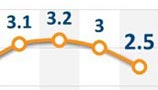
However, an economic slowdown, which trimmed the country's GDP growth to 6.7 percent in the first quarter, has bitten into SOEs' profitability and left many struggling to keep afloat.
Combined profits of Chinese SOEs saw a decline of 9.6 percent year on year in the first five months despite warming signs in the broader economy.
To reverse the situation, policy makers are promoting an overhaul on SOEs, piloting mixed ownership programs, encouraging mergers and acquisitions, and downsizing overstaffed companies.
President Xi Jinping and Premier Li Keqiang gave written advice on the development of SOEs to a national meeting on SOE reform earlier this week.
Xi demanded continued efforts to enhance SOEs' vitality, competitiveness and risk resistance, and to establish a modern corporate governance system.
The premier urged SOEs to slash excess production capacity, boost technological innovation and upgrade traditional industries.
In fact, many SOEs still have huge investment in lackluster traditional heavy industries and are overburdened by high operational costs and long payrolls, according to Xiao Yaqing, head of the State-Owned Assets Supervision and Administration Commission of the State Council.
More efforts are needed to improve state-owned asset management and change rigid corporate governance, Xiao said.
"Further measures will be rolled out to facilitate changes in SOEs, including industry consolidation, improvement in main business and overcapacity reduction," said CERI's Li.
At the same time, Chinese leaders appeared to attach similar, if not equal, importance to private firms, which created about 60 percent of China's GDP and around 80 percent of jobs, but have recently been hesitant to invest.
Private fixed-asset investment increased 3.9 percent year on year in the first five months of 2016, compared with 11.4-percent growth in the same period last year.
Official surveys in May revealed local governments' failure to fully implement pro-private investment measures, including wider market access, lower financial costs and equal government services.
The State Council said in a notice also this week that it will dispatch inspectors in mid-July to regions with huge, but sharply slowed, private investment.
The notice did not specify which provincial-level regions will be targeted. It asked local governments and departments to mend their ways and do as required by a string of documents released since the incumbent central government was formed.


Copyright 1995 - . All rights reserved. The content (including but not limited to text, photo, multimedia information, etc) published in this site belongs to China Daily Information Co (CDIC). Without written authorization from CDIC, such content shall not be republished or used in any form. Note: Browsers with 1024*768 or higher resolution are suggested for this site.
License for publishing multimedia online 0108263 Registration Number: 130349