BEIJING - The G20 Hangzhou summit has boosted sentiment that the traditional growth engines of investment and trade can be revived, however, for the commitments to truly materialize, countries must follow through with concrete actions.
During the two-day gathering, leaders of the G20 members, which account for 80 percent of the world's trade volume, agreed to formulate the strategy for global trade growth and the guiding principles for global investment policy-making.
The two policies, if effectively implemented, will be of vital significance to world growth at a time when free trade and globalization are encountering myriad obstacles.
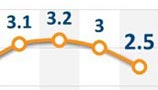
Global trade growth slowed from an average of over seven percent each year between 1990 and 2008 to less than three percent between 2009 and 2015. Last year was the fourth-consecutive year that global trade growth was below GDP growth, according to statistics from the World Trade Organization.
Along with the prolonged downturn, protectionism is on the rise. Since October 2008, 2,800 trade restricting measures have been rolled out by WTO members, 75 percent of which are still effective today.
To revitalize the growth engines, G20 members agreed to ratify the Trade Facilitation Agreement by the end of 2016, and pledged to use the newly-established Trade and Investment Working Group (TIWG) to identify new approaches that will help spur global trade growth, and enhance investment policy coordination.
While the two policies have set the course for progress, they will be useless without concrete actions by the G20 members -- the promises must be delivered.
"The direction and course has been set, everything now hinges on how determined countries are to push through the policies," noted Liu Zhiqin, an analyst with Chongyang Institute for Financial Studies, Renmin University of China.
Liu pointed out that protectionism will remain a major block as G20 guideline clauses are non-binding, and many countries may prioritize their own short-term interests over that of the wider international economy.
As the holder of the G20 rotating presidency, and the world's second largest economy, China has stepped up in this regard.
On the world stage, China and the United States held their 28th round of bilateral investment treaty (BIT) talks in Beijing last month, where both sides exchanged new "negative list" offers, with the common goal of establishing a non-discriminatory, transparent and open investment environment through negotiations.
In another step, the government announced plans to set up seven new free trade zones. China's first free trade zone was established in Shanghai in 2013 and another three across the country followed in 2014.
In addition, China's top legislature has revised four laws to ease restrictions on overseas investment. When they come into force, on Oct. 1, they will assist in the implementation of the "negative list" mechanism, which will determine where, and where not, overseas investment can be channeled.
The efforts of one country alone is not enough, Liu pointed out. He called for concerted action and cooperation from all countries to successfully deliver the G20 blueprint.


Copyright 1995 - . All rights reserved. The content (including but not limited to text, photo, multimedia information, etc) published in this site belongs to China Daily Information Co (CDIC). Without written authorization from CDIC, such content shall not be republished or used in any form. Note: Browsers with 1024*768 or higher resolution are suggested for this site.
License for publishing multimedia online 0108263 Registration Number: 130349