BEIJING -- As trade ministers in the Asia-Pacific region agreed Thursday to slash the tariffs of 54 green products including solar batteries, the European Commission, on the same day, announced a decision running exactly the opposite.
The European Commission started anti-dumping investigation into imports of solar panels and key components from China, claiming the products were being exported for less than costs and squeezing counterparts out of business.
However, the APEC leaders offered a precisely different concept and solution to the green product trade, as they believe lower tariffs will "contribute significantly to our green growth and trade liberalization objective."
As the world is grappling deep in the prolonged economic quagmire, APEC leaders' moves open up new chances for shared boon, either economically and ecologically, while EU's probe wields a "big stick" to its flimsy economic recovery and troubles the green agenda.
No agreement could be reached without compromise and consultation. APEC leaders also have concerns of protecting their domestic industries when discussing which products should be put into the basket of tariff cuts.
But after rounds of talks, they stroke a very good balance of interests among all members, which include major economic engines such as the United States, China, Japan and Russia.
German Chancellor Angela Merkel said last week in Beijing that she preferred negotiations, rather than a confrontational approach to solar trade disputes. However, the EU rushed into the bold act on the heels of Merkel's China trip, which undermines the Chancellor's goodwill to keep divergence under control.
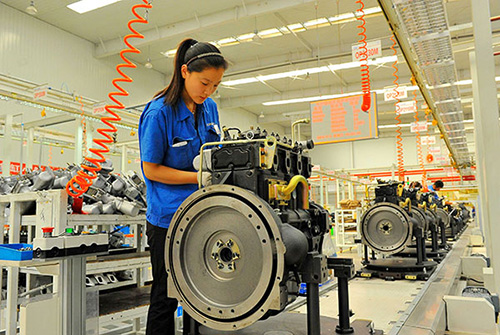
The presence of China's solar industry owes to the hard work and low pay of Chinese workers, as well as Chinese engineers' independent research on solar technology. The affordable price of Chinese solar panels is entitled to be viewed as a contribution to the global green efforts.
Instead of benefiting from the protective measures, if taken, the EU solar industry will suffer also. Last year, China bought polysilicon and other raw material for solar panel making worth $1.12 billion last year, and $1.71 billion of equipment from Germany and Switzerland.
If punitive duties were added, EU's equipment makers will taste the bitterness of dwindling orders from China, and its solar power station operators will run at higher costs. In the end, it is the ordinary consumers that will pay the bills.
In anticipation of the possible probe, China's top four solar panel producers have asked the Ministry of Commerce to consider counter measures against EU imports.
After the US government launched a similar case against China's solar panel products this year, China announced an anti-dumping probe against US polysilicon, the primary material for solar panels.
The solar case marks the biggest such complaint filed by the EU in terms of import value, and that is likely to make a tit-for-tat scenario between the world's second largest economy and the 27-nation bloc unavoidable.
In fact, the general climate of China-EU trade relations is fine, as the two remain each other's largest trading partners with bilateral trade topping $517 billion?last year.
Since the outbreak of the global financial crisis, China has reached out to the continent buying government bonds and investing in infrastructure projects.
China's sovereign-wealth fund acquired some stakes in Thames Water, Britain's largest water supply and treatment company. Portugal sold part of stakes in the national electricity grid to a Chinese state-owned firm.
During Merkel's visit last week, China signed a deal for 50 Airbus A320 planes worth $3.5 billion with Airbus. The two also signed more than 10 other cooperative documents in aviation, automobile, communication, energy, environment and health.
China and the EU should cherish the long-standing trade ties, as John Clancy, spokesman for EU Trade Commissioner Karel de Gucht defined the bilateral trade relationship as "mature".
However, he put the solar probe as "part of a mature trading relationship with a very key trading partner of the EU" that is China, as he said "trade defence is part of that relationship."
A mature trade relation should be built on mutual understanding and trust, not on narrow consideration of the interests of a handful of groups.
As China and the EU are scheduled to hold the annual summit in Brussels later this month, more thorny issues will be on the agenda. Smooth trade ties will only act as a boon rather than a doom for the two to weather the current hardships.

Copyright 1995 - . All rights reserved. The content (including but not limited to text, photo, multimedia information, etc) published in this site belongs to China Daily Information Co (CDIC). Without written authorization from CDIC, such content shall not be republished or used in any form. Note: Browsers with 1024*768 or higher resolution are suggested for this site.
License for publishing multimedia online 0108263 Registration Number: 130349