

 Comments
  Print
Print  Mail
Mail  Large Medium Small
To tackle the problem, the central government initiated a medical system reform in 2009, promising to improve medical conditions in the countryside by providing more funds.
During China's Eleventh Five-Year Plan from 2006 to 2010, the Ministry of Health allocated about 175.4 billion yuan to boost the development of the medical system in China's poverty-stricken areas, with a year-on-year increase of 73 percent. The money was supposed to cover construction expenses for the health centers' facilities as well as equipment renewal.
The system upgrade did work wonders, said Bai, who saw advanced medical machines used to treat patients during his second rural tour in 2011.
But the renewal boom is also becoming a hotbed for rural corruption, as medical device sales agents try to edge each other out to grab a share of the public funds by bribing the heads of rural health centers.
In Luocheng, which is home to more than 30 companies selling medical devices, sales agents use various methods to bribe center chiefs, according to procuratorial personnel in the county.
An agent in Luocheng, who refused to be named, said that heads of rural medical centers easily fall for the bait, as the amount of money spent on equipment is comparatively smaller than in big city hospitals, and these officers tend to be less "on guard" than their peers in big cities.
"If we can get the heads of multiple health centers to buy our equipment, we can reap more benefits than we do with big hospitals," said the agent.
According to Bai Zhipeng, the general public is more concerned about doctors receiving kickbacks for medicine, and largely ignores the fact that hospitals and rural health centers increasingly take commissions from sales agents selling medical equipment.
Bai laid the blame on a lack of open bidding when rural health centers purchase medical equipment.
Although the government requires open bidding before purchases, the grassroots medical institutions, which manage funds on their own, tend to buy equipment without notifying county-level health bureaus, which makes it difficult for the government to supervise, Bai said.
Even when centers hold open bidding, bidding documents can be changed to meet the specific requirements of the medical equipment companies that have secretly offered bribes to those in charge of centers.
Luo Guo'an, an expert from the Guangxi Academy of Social Sciences, said that while China's rural medical institutions are welcoming the boom in medical equipment purchases, supervision is still poor compared with big city hospitals.
"There is an urgent need to ramp up supervision of these health centers to prevent such crimes from happening," Luo said.
Serious corruption in the poor areas of China has drawn the public's attention, and now governments on various levels are considering measures to battle the crimes.
In Luocheng, an accounting center, which is supervised by accounting staff from the county health bureau, has been established to oversee the amount of money used by local health centers.
To prevent public funds from being pocketed by avaricious officers, Bai suggested that a team of experts is needed to oversee the bidding process.
"Health departments at the provincial and municipal levels should join hands in holding open bidding activities to ensure a transparent bidding mechanism," Bai said.
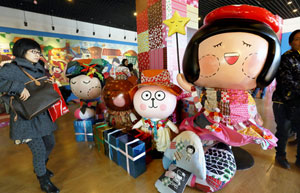 Getting in the mood
 Models at Mercedes pavilion at 2013 Auto Guangzhou
 Buick Riviera concept car at 2013 Auto Guangzhou
 FAW-VW all-new Golf at Guangzhou auto show
 VW donates more than 5k child safety seats
 Honda models at 2013 Guangzhou auto show
 Honda Jade at the 2013 Guangzhou auto show
 Toyota's new Reiz debuts at 2013 Auto Guangzhou
Copyright 1995 - . All rights reserved. The content (including but not limited to text, photo, multimedia information, etc) published in this site belongs to China Daily Information Co (CDIC). Without written authorization from CDIC, such content shall not be republished or used in any form. Note: Browsers with 1024*768 or higher resolution are suggested for this site.
License for publishing multimedia online 0108263 Registration Number: 20100000002731