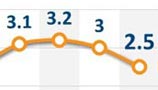
Since price increase has greatly influenced homebuyers' expectations over the years, it is difficult to stop speculators from entering the housing market by just passing some administrative measures. For example, when the Beijing local government imposed a conditional ban on certain groups of people from buying houses in the city in 2011, an underground ring sprang up immediately to help unqualified homebuyers bypass the ban if they paid a "fee". Similarly, at a time when most potential homebuyers expect housing prices to fall, how can local authorities entice them into buying houses at current prices?
 |
Moreover, the explosive growth of Internet finance since 2003 and "shadow banking" have to some extent changed the direction of the flow of funds in the domestic financial market. The outflow of a large amount of deposits from China's normal financial system has not only reduced available funds that banks use for lending, but also has pushed up lending prices. That domestic banks are charging higher interest rates while the scale of lending is decreasing is a contradiction of sorts, and it will affect housing credit demands.
The depreciation of the yuan against the US dollar over the past few months, too, has dampened the prospects of yuan-denominated assets such as real estate, and deterred investors and speculators from buying new property or prompted them to sell property they had bought earlier.
It is likely that the fear of a collapse in the supply of their funds will force some developers to lower housing prices in order to get faster returns on their investment, which will play an important role in influencing housing prices.
After a decade of rising prices, China's housing market is bound to lose its upward momentum. Bailout policies by local governments to prevent housing prices from falling, therefore, are unlikely to yield expected results. Instead, they could aggravate investors' concerns over risks and thus accelerate their flight from the housing market.
The author is a researcher at the Institute of Finance and Banking, affiliated to the Chinese Academy of Social Sciences.

Copyright 1995 - . All rights reserved. The content (including but not limited to text, photo, multimedia information, etc) published in this site belongs to China Daily Information Co (CDIC). Without written authorization from CDIC, such content shall not be republished or used in any form. Note: Browsers with 1024*768 or higher resolution are suggested for this site.
License for publishing multimedia online 0108263 Registration Number: 20100000002731