BEIJING -- For the past decade, Chinese policymakers have spent big on major projects to buoy growth in the face of economic hardship, and this approach appears not to have changed with the "new normal" of lower GDP growth.
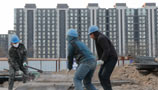
This week, China's top economic planner, the National Development and Reform Commission (NDRC), approved the construction of a new Beijing airport worth nearly 80 billion yuan ($13 billion).
Approval of the project, followed by approval of five highway projects this week, came amid a fresh wave of investment in the fourth quarter of 2014.
Since October, the NDRC has given the greenlight to 27 projects worth a total of about 1.2 trillion yuan. Most of them were transportation infrastructure projects in China's middle and western regions.
Transport infrastructure is one of seven "major project packages" proposed by the economic planner earlier this year to lure investment, especially by private investors, with preferential measures.
The remaining packages include projects in power grids and oil pipelines, health care, environmental protection, oil and gas exploitation, green energy and agriculture.
"Boosting investment is an important move in response to the economic 'new normal'," said NDRC spokesman Li Pumin.
Investment, consumption and exports are the three driving forces of a country's economy. Although spending on expensive projects is a universal and effective way to stimulate growth in many countries, this "prescription" has become quite controversial in China as previous large-scale investment plans resulted in serious overcapacity problems.
Zuo Xiaolei, chief economist of China Galaxy Securities, said over-reliance on investment is an old mindset and policymakers should strive to forge new growth engines.
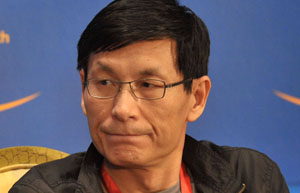
However, Hou Yunchun, former deputy director of Development Research Center under the State Council, said that encouraging investment may be the best choice currently.
"Consumption and exports will largely remain stable in the near future. What we can do is to spur investment in urban infrastructure and public service," Hou told the National Business Daily.
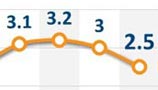
The situation is pressing. China's GDP slowed to 7.3 percent in the third quarter and fixed-asset investment also decelerated.
In addition, the consumer price index (CPI) hit a five-year low in November and very modest inflation indicated weak domestic demand and high downward pressure, according to Niu Li, an economist at the State Information Center.
China's central bank predicted in a report this week that the country's 2015 GDP growth could slow to 7.1 percent, following wide market expectations that China may lower its GDP target for next year.
Preventing GDP and CPI from dropping steeply is China's top task in 2015, said HSBC chief China economist Qu Hongbin.
"China will make investment play a pivotal role in economic expansion," said a statement released last week after the Central Economic Work Conference, an annual tone-setting meeting for next year.
"Although traditional sectors are saturated after decades of rapid growth, there are still great investment opportunities in infrastructure and other emerging sectors," said the statement.
China has abundant capital thanks to high saving rates and market potential is huge in urbanization, pollution abatement, education, and medical care, said Niu.
"The NDRC will make sure all projects in the seven packages go smoothly and roll out more packages at a proper time," said Li.

Copyright 1995 - . All rights reserved. The content (including but not limited to text, photo, multimedia information, etc) published in this site belongs to China Daily Information Co (CDIC). Without written authorization from CDIC, such content shall not be republished or used in any form. Note: Browsers with 1024*768 or higher resolution are suggested for this site.
License for publishing multimedia online 0108263 Registration Number: 130349