BEIJING -The Chinese renminbi is unlikely to see drastic depreciation in 2015 despite fluctuations, thanks to the country's solid economic fundamentals and a stable policy.
Expectation of a lukewarm domestic economy and a continuously rising US dollar so far this year have created concern that the renminbi, also known as yuan, is set to depreciate sharply this year.
The concerns did not develop out of thin air. The central parity rate of the renminbi has been declining for four days in a row since the new year's trading started.
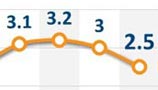
This follows a 2.5 percent depreciation in the spot exchange rate of yuan against the US dollars in 2014, the first annual decline since 2005 when China launched the reform of yuan's currency exchange rate mechanism.
Other major currencies, such as Japanese yen, Russian rouble and euro, have also continued decline, exerting more pressure on the renminbi.
However, analysts said the wild fluctuation of yuan exchange rates during the final two months of 2014 did not represent a drastic change in China's currency exchange rate policy, and a sharp depreciation of renminbi in the new year is out of the question.
It remains the country's policy to keep the exchange rate of renminbi stable at the "appropriate equilibrium level" and expand the floating range of rates, Liu Dongliang, senior analyst of China Merchants Bank, told Xinhua.
China's strong current account surplus will help support the currency, analysts said.
China recorded a current account surplus of $152.7 billion in the first three quarters of 2014, representing 2.2 percent of the GDP. A CICC report predicts the ratio will rise further to 3 percent this year as the effect of lower commodity prices passes through the economy.
In particular, the latest bouts of slumping oil prices, sparked by a supply glut and sluggish demand, is expected to remain, knocking billions off China's import bill this year.
According to J P Morgan's chief China economist Zhu Haibin, every $10 reduction in oil prices will drive up China's current account surplus/GDP ratio by around 0.3 percent. The bank predicts the ratio to rise to 3.6 percent in 2015.

Copyright 1995 - . All rights reserved. The content (including but not limited to text, photo, multimedia information, etc) published in this site belongs to China Daily Information Co (CDIC). Without written authorization from CDIC, such content shall not be republished or used in any form. Note: Browsers with 1024*768 or higher resolution are suggested for this site.
License for publishing multimedia online 0108263 Registration Number: 130349