BEIJING - Eight years after the 2008 international financial crisis, global economic recovery remains unimpressive. Worst of all, there's been a resurgence in anti-trade sentiment.
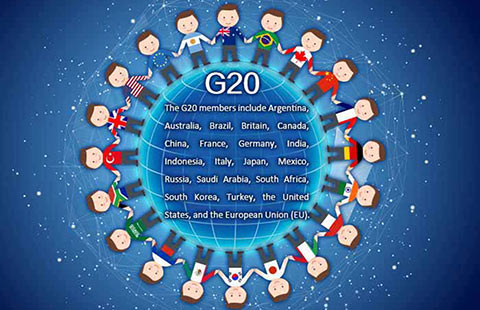
As leaders of the Group of 20 (G20) economies, the premier platform for international economic cooperation, gather in the Chinese city of Hangzhou, it is time for them to declare a resounding "No" to growth-throttling trade protectionism.
Around the world, anti-trade sentiments are swelling up. In the heated presidential race in the United States, Republican nominee Donald Trump and his Democratic rival, Hillary Clinton, are at each other's throats. But they remain united on one front - questioning and attacking free trade.
Though some believe both White House contenders are deriding free trade merely as an election tactic and would strike a different tone once the race is over, no one should take their beliefs for granted.
In Britain, a June referendum has thrown that country on its way out of the European Union and its free trade with the rest of the bloc in uncertainty.
The World Trade Organization (WTO) has also painted a gloomy picture of the global economy. It said recently that since 2008 G20 members have introduced a total of 1,583 new trade restricting measures.
Among them, many involve anti-dumping and other similar cases in the trade of steel and other metals, including the EU's move to impose anti-dumping tariffs on Chinese steel products last month.
The WTO has also warned that discriminatory measures are being introduced at an accelerating rate.
Unsurprisingly, global trade growth is slowing down. The WTO puts this year's trade growth rate at 2.8 percent, the same as that of last year.
Experts believe that it would take years for global trade to return to the days of 7-percent annual growth.
At the same time, the total value of world merchandise trade is evaporating. It fell from 19 trillion U.S. dollars in 2014 to 16.5 trillion dollars last year, a 13-percent decline.
That trend must be reversed. Trade is an important and indispensable powerhouse of global growth; it should by no means be allowed to stall.
Just like how they joined hands after the outbreak of the 2008 crisis to pull the global economy out of the abyss, G20 members need to follow an all-in-the-same-boat spirit and form a united front against various forms of protectionism.
At the upcoming G20 Hangzhou summit, which is to open Sunday, Beijing will push for a strategy to spur global trade and investment. It is estimated that, if put in place, it will increase world trade by 1 trillion dollars each year and create 21 million new job opportunities worldwide, of which 8 million will be in developing countries.
Others should join the host's efforts to prevent protectionism from eroding the foundation for a faster and healthier world economic recovery.
With the specter of protectionism rearing its ugly head, it is no longer an option for G20 members and other traders to sit on their hands and do nothing.


Copyright 1995 - . All rights reserved. The content (including but not limited to text, photo, multimedia information, etc) published in this site belongs to China Daily Information Co (CDIC). Without written authorization from CDIC, such content shall not be republished or used in any form. Note: Browsers with 1024*768 or higher resolution are suggested for this site.
License for publishing multimedia online 0108263 Registration Number: 130349