Red carpet means openness
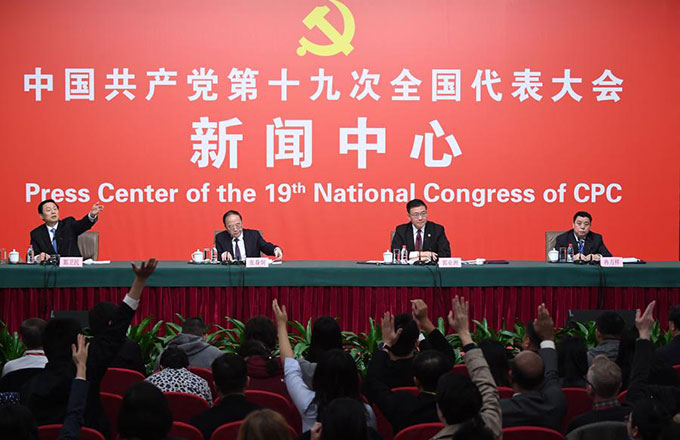
A long red carpet in a side corridor of the Great Hall of the People in the heart of Beijing always arouses media attention during the annual parliamentary sessions in March. It's where high-level officials meet with reporters and answer questions.
The carpet was nicknamed the "ministers' passage".
But at the ongoing 19th National Congress of the Communist Party of China, the leading characters are Party delegates, and so the corridor has been renamed the "delegates' passage".
It is the first time the Party congress has included such an avenue to provide opportunities for reporters to interview delegates.
As a journalist covering the congress, I was fortunate to have been able to ask a question in the corridor on Wednesday about China's latest developments in high-end computer servers.

The interview was scheduled for one hour and set to begin at 7:30 am. At around 6 am a large number of journalists from home and abroad arrived at the hall. I was among them.
The delegates who gave interviews on the red carpet came from different walks of life, including universities, technology companies, judicial authorities and military departments. About 2,280 delegates are attending the congress, representing more than 89 million Party members across the country.
So far, about 40 delegates have been interviewed in the corridor, and more delegates are expected to appear and respond to journalists' questions on Tuesday, when the congress ends.
Different from the ministers' passage, on which most questions related to government policy, journalists this time are asking more questions about Party building and the delegates' personal stories - including changes in their careers over the past five years.
Most topics broached in the corridor were serious, but I was glad to see that some delegates, such as Lu Li-an, could respond in an easygoing way.
When the Taiwan native, who teaches English literature at Fudan University in Shanghai, was questioned about how she views Taiwan after working on the Chinese mainland for 20 years, she not only spoke highly of the progress of the mainland's soft power but also showed deep love for her hometown by telling a personal story.
"We love Taiwan and also love the motherland," she said in Mandarin before repeating it in the Minnan dialect used in Taiwan and Fujian province.
The integrated development of the mainland and Taiwan is feasible, she added.
Although the interviewees on the red carpet have changed, the purpose of the path remains the same: to make the Party and the government more transparent. Although change has come gradually, I can feel it, and I've benefited from it.