|
China embraces small, efficient cars
(Reuters)
Updated: 2006-06-09 16:30
Small cars were banned from Beijing's main roads less than a decade ago, as
authorities worried that cheap, spluttering vehicles would clog lanes they hoped
to fill with sleek modern autos.
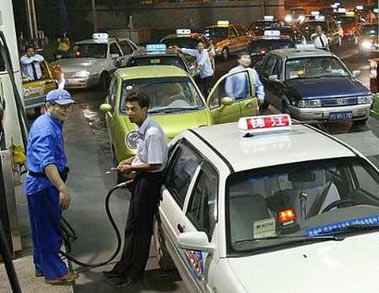
Taxis
wait to get their tanks filled before the rise of the oil price at a gas
station in Shanghai May 23, 2006. China has raised prices of processed oil
twice in the first five months of this
year.[Reuters] |
Today, pollution, traffic jams and a
growing dependence on imported oil have forced a radical rethink that has made
China a pioneer of some of the world's tightest fuel efficiency standards and
stricter emissions limits.
Forward-thinking policy-makers are steering
the country onto a very different road than top guzzler America, where low
taxes and static standards coddle a motoring populace addicted to long trips and
inefficient SUVs.
Beijing's measures may not help it cope with oil
demand expected to expand at 5 percent or more over the next five years, twice
the US rate, but could prevent a big-car culture from fuelling even faster
growth in the decades to follow.
China burns about as much gasoline as
Japan but has 10 times more people, and transportation is expected to account
for over 60 percent of oil use by 2020 versus around 30 percent now.
"The government recognises that energy resources going forward are a
problem... This is part of a far broader and more pervasive policy of addressing
fuel and energy efficiency," said Clive Saunderson, automotive partner at Ernst
& Young in Beijing.
"Beijing is keen to improve fuel efficiency, but
it's also trying to work out how it actually does this without causing harm to
what is a very important nascent industry in China," he added, referring to its
rapid rise as a car manufacturer.
China's growing middle class now
demands cleaner air and roads that work in addition to job prospects,
while authorities are working hard to balance growth with
pollution and a growing appetite for imported crude, much of it from politically
unstable areas and at near record costs.
With that in mind, Beijing is
encouraging the manufacture of small-engine cars, has imposed taxes on
gas-guzzling autos and is experimenting with biofuels, hydrogen-powered and
hybrid cars.
But with car sales up over 50 percent this year -- aiding
manufacturers such as Hong Kong-listed Dongfeng Motor Group Co. Ltd. and
Shanghai Auto, a major partner of both Volkswagen AG and General Motors Corp. --
smaller engines are more likely to trim growth in fuel consumption than halt it.
Already the world's third-largest vehicle market, China had some 24
million cars on the road by the end of 2005, but if car use approaches US
levels, by 2031 this could rise to over 1 billion vehicles nationwide, said
environmentalist Lester Brown.
India, where only eight in 1,000 people own a car, have
undertaken similar measures, cutting excise taxes on on small cars by 8
percentage points in its budget for this year.
|
| |
|
| |
|
|
|
| Most Commented/Read Stories in 48 Hours |
|
|
|
|
