It was unusual to hear Internet buzzwords from a top Chinese official.
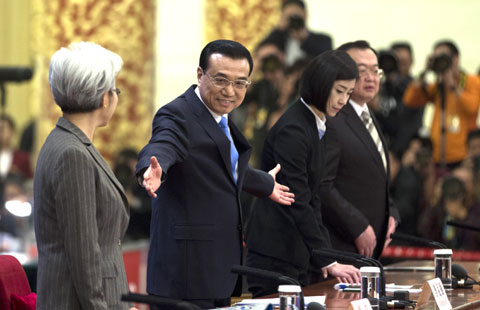
When Premier Li Keqiang delivered this year's government work report at the 12th National People's Congress on Thursday, he said the government should fight against excessive use of power by people who are "renxing"-a word popular on the Internet that has gone beyond its traditional meaning of "headstrong" to also refer to someone who carelessly squanders money and power.

It's not the kind of word one expects to hear in a top government document.
But for me, a five-year reporter at China Daily covering technology, hearing the government quote from cyberspace means it is ready to embrace opportunities brought by the booming Internet economy.
In his Government Work Report, Li introduced the Internet Plus strategy-integrating the mobile Internet, cloud computing, big data and the Internet of Things with modern manufacturing to boost efficiency.
The Internet is serving as the foundation of 21st century human society, and while I can imagine a day without food, I am frightened to think of a day without the World Wide Web. The flow of information on the Web inspires my brain and broadens my vision on a daily basis.
China needs to be connected to the outer world via what could be the most important invention after electricity. The country has already put half of its population on the Internet over the past two decades and is starting to enjoy the benefits of interconnection.
China wants the strong momentum of the Internet industry to transfer vitality to traditional industries where the growth is slowing.
If you have no idea how vibrant China's Internet market is, check out the rich list. Magnates such as Tencent's CEO Pony Ma and Baidu's Robin Li dominate the top spots.
The booming online shopping business not only made Alibaba Chairman Jack Ma the richest person in China, it also became a critical pillar of the economy.
E-commerce turnover in China, fueled by purchases made through smartphones, will be around $650 billion by 2020, according to research company IDC. That equals today's online shopping market of the United States, Japan, the United Kingdom, Germany and France combined.
The Internet did not only make Chinese rich, it also helped us find out how modern technologies have paved a shortcut for the country to catch up with the West.
When I started my career in 2010, people were ignorant about the idea of cloud computing. "You can put my data on the cloud? Get out of here," was a fitting response when a manager heard data experts talking about cloud computing back then. Nowadays, I hear managers talk with their chief information officers about how to extract business value out of the data they store on the cloud.
Li's idea of Internet Plus hints that the country is directing more modern information technologies into traditional industries to lift competitiveness.
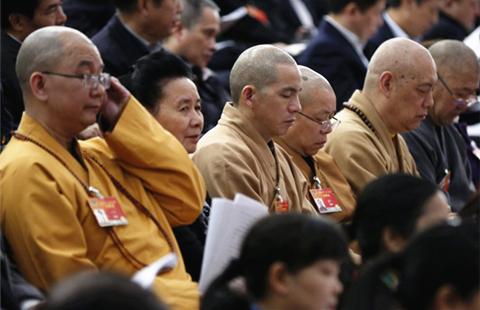
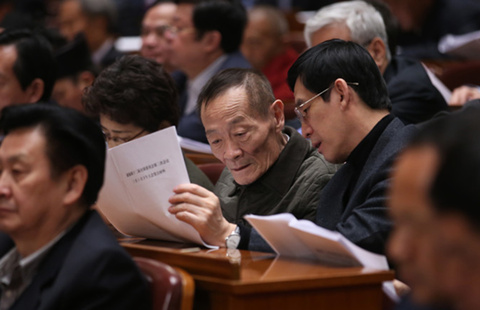
A great number of political advisers have suggested ways to spur local technological innovation at this year's two sessions. It is a clear message for the top leaders that adopting new technologies is urgent in a long list of sectors.
The industry should feel happy when hearing Li quote a Web buzzword and bring new plans to the Internet sector. A fresh round of vibrant development is right around the corner.
Contact the writer at gaoyuan@chinadaily.com.cn
Related Stories
Copyright 1995 - 2015 . All rights reserved. The content (including but not limited to text, photo, multimedia information, etc) published in this site belongs to China Daily Information Co (CDIC). Without written authorization from CDIC, such content shall not be republished or used in any form. Note: Browsers with 1024*768 or higher resolution are suggested for this site.
License for publishing multimedia online 0108263 Registration Number: 130349