Social media sales bring health risks
Dangerous food, drugs peddled in unregulated market, experts say
Because of a legal and regulatory vacuum, social media in China have become a hotbed for the sale of fake and substandard food and drugs that pose a risk to people's health, experts said.
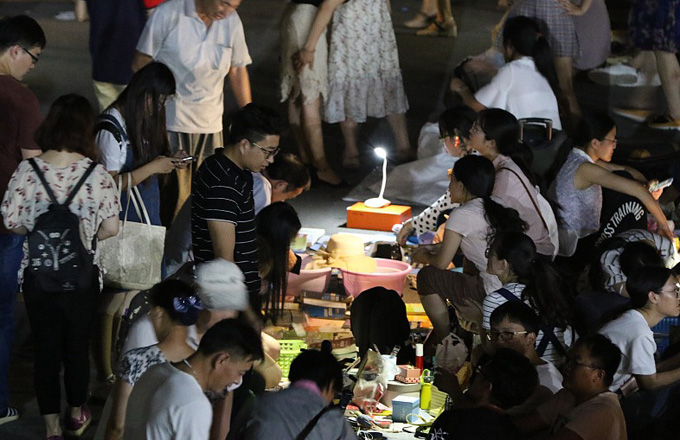
Businesses enabled by social media, such as WeChat, Sina Weibo and livestreaming platforms - known as social commerce - have prospered in recent years in China, with an estimated market value of 360 billion yuan ($52.7 billion) last year, according to the Internet Society of China.
"It now employs more than 15 million people and is growing rapidly," said Yu Lijuan, head of the society's social commerce division.
Of the products sold via social media, food and drugs were the second-largest category, at 36 percent, behind cosmetics and beauty products, the society found.
According to Li Min, a division director of the Beijing Food and Drug Administration, some social media merchants take advantage of the lack of regulation to profit from substandard products - primarily via WeChat, which has 800 million users.
Current food and drug safety laws and regulations cover e-commerce transacted via major platforms like Taobao, while social media channels have been mostly off the regulatory radar.
"As the communication there is highly personal and private, it's hard to detect and regulate, and that poses health risks to the public," he said.
The municipal FDA formed a special division in 2015 to oversee food and drug safety online. Last year, it launched a cleanup campaign against social media sales of botulinum toxin (Botox is one well-known brand), a popular cosmetic injection for reduction of facial wrinkles. Much of it was substandard and not approved by the drug authorities, Li said.
In June last year, in Huaihua, Hunan province, an operation making and selling fake health food for weight loss was broken up by police. The suspects added the slimming drug sibutramine to products marketed as natural health food. Some buyers were poisoned by overdoses, said Yi Hanzhong, deputy head of the city's public security bureau.
The fake products seized were valued at more than 100 million yuan and sold in 10 provinces, he said.
Yu, of the internet society, urged the government to devise systems to manage the problem.
China is in the process of developing its first e-commerce law, and "social commerce should be governed by that as well", Yu said.