Classics inform conversations in author's contemporary title
 |
|
Literary critic Li Jingze's latest book Yong Er Gui draws a lot from Confucius' teachings and times. [Photo provided to China Daily] |
Confucius once asked his students: "What is your ideal life?"
Some said they wanted to help run the country. Others said they wanted to educate people on morality.
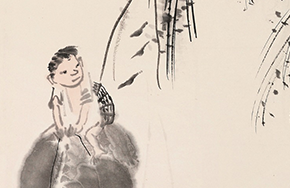
A student named Zeng Xi said: "My ideal life is to go with friends and helpers to swim in the rivers outside the city in spring. And after swimming, we, in our wet clothes, will go up to the Wuyu Tai (an elevated place in the open once used for worship and later converted into a venue where Confucius and his students met). After the gentle breeze dries our clothes, we will return, humming verses."
Compared with what others said, this student's comment seemed trivial, but Confucius nodded and said: "It's my ideal life, too."
This is how Chinese literary critic Li Jingze explains the meaning of the title of his new book, Yong Er Gui (Humming and Returning).
The recently published book is a collection of 55 essays in which Li tries to "sit down and chat over drinks with ancient China's literary masters, such as Confucius, Mencius, Qu Yuan and Si Maqian, and with later writers like Cao Xueqin". He also talks about his understanding of Buddhist texts, his library, drinking and other leisure activities.
"Reading classics does not necessarily require one to be very academic or serious. The books can be relaxing," says Li, 53.
"While we read books by ancient people, we should try to communicate with them not only in awe but also to converse with them as equals, to understand and feel their greatness, wisdom and difficulties.
"In classics, we can learn about how people in ancient times made important decisions about their lives, how they understood the meaning of life and how interesting their lives were, so that we, modern people, know how to understand and live our lives, to find a home for our wandering souls."
In writing the essays, Li has created a new style, a mix of personal thinking and conversations-casual, relaxing and funny-as if he was thinking aloud or talking to a good friend.