

| .contact us |.about us | |
|


|
|
|
|
|||||
|
|
|
|
|||||
 |
||
|
|
|
|
|
|
|
||
|
|
|
|
|
| Advertisement | |||||||||||||||||||||||||||||||||||||||||||||||||||||||||||||||||||||
|
NY Times: The attraction that is southern China ( 2003-11-05 10:18) (New York Times)
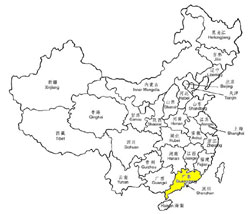
A state governor in the United States could only dream of attracting a corporate advisory board to match the 21-member roster assembled by a Chinese provincial governor at a two-day annual conference in Guangzhou, southern China's Guangdong province.
 Maurice R. Greenberg, the chairman
and chief executive of the American International Group, spoke
of the need for better corporate governance and stronger financial markets.
Daniel Vasella, the chairman and chief executive of Novartis,
the pharmaceutical giant that is Switzerland's largest company, discussed the
importance of research, as did Daniel A. Carp, the chairman and chief executive
of the Eastman Kodak Company. Dinesh C. Paliwal, the executive
vice president of the ABB Group, and Byron Grote, the chief
financial officer of the BP Group, held forth on the
attractiveness of the local energy market. Maurice R. Greenberg, the chairman
and chief executive of the American International Group, spoke
of the need for better corporate governance and stronger financial markets.
Daniel Vasella, the chairman and chief executive of Novartis,
the pharmaceutical giant that is Switzerland's largest company, discussed the
importance of research, as did Daniel A. Carp, the chairman and chief executive
of the Eastman Kodak Company. Dinesh C. Paliwal, the executive
vice president of the ABB Group, and Byron Grote, the chief
financial officer of the BP Group, held forth on the
attractiveness of the local energy market.
The gathering underlined the extent to which Guangdong Province, which lies along the southeastern coast of China, has rebounded fully from the outbreak of severe acute respiratory syndrome that started here last winter and spread to other continents before fading out in June. Attendance dropped by close to 90 percent at the semiannual trade fair held here in the spring, at the height of the outbreak, but rebounded fully for the next fair, which just ended. With demand surging at home and exports rising even faster, factories here are working overtime, spewing clouds of smoke that cover the city in a gray pall and have spread 80 miles down the Pearl River to Hong Kong, which had its worst smog on Monday since record-keeping began four years ago. Executives at the conference that ended here on Tuesday expressed no worries about a possible recurrence this winter of SARS, which seems to have disappeared like a dimly recalled nightmare of face masks and televised news conferences by doctors. Pekka Ala-Pietila, the president of Nokia, said that his company's huge cellphone factory near here had not lost a day of production during the epidemic. Instead, the main concern here was the same one political leaders in Beijing have been citing: the need to improve education and training for the work force so that China can move beyond being the world's main supplier of cheap labor and become a serious challenger to industrialized countries in sectors requiring more skills, from auto manufacturing to computer chips. "They have to educate people, they have to invest" in training, said Hans-Jorg Bullinger, the president of Fraunhofer-Gesellschaft, the big German contract research company. Mr. Carp of Kodak agreed. "The most far-sighted and practical step the government can do is strengthen educational institutions," he said. While improving education is a national goal, it is particularly a problem for Guangdong Province and for Guangzhou, the provincial capital, which used to be called Canton. The Pearl River delta has become China's richest region, with incomes in big cities like Guangzhou and Shenzhen almost four times the national average. Less prosperous regions with even lower wages and land prices, most notably the Yangtze River delta around Shanghai, are starting to attract manufacturers that once headed straight for Guangdong. Guangdong is still China's biggest exporter because Deng Xiaoping's great experiment in capitalism began here in the late 1970's, while free-market changes were only really encouraged by the central government in Shanghai, beginning in 1992. But China's best universities remain in Beijing and Shanghai, while Guangzhou has yet to create the equivalent of a Stanford University, a world-class institution of higher learning far from traditional centers of academic excellence. Carl-Henric Svanberg, the chief executive and president of Ericsson, spoke of his company's 3,500 employees in manufacturing, research and development in China, and of the economic potential of Guangdong Province, but conspicuously did not mention that Ericsson's research and development centers were in Beijing and Shanghai. Guangdong has focused more on luring assembly lines for higher-technology businesses like consumer electronics companies and automakers, drawing top executives from the Honda Motor Company and the Sanyo Electric Company to the conference here. These industries have emerged as successors to the toy makers and furniture companies that used to be the province's economic mainstays. Governor Huang Huahua of Guangdong Province, the leader of the conference here, said that Toyota agreed to build car engines here and then an assembly plant with an annual capacity of 300,000 cars, and predicted that Beijing would approve the plan soon. A Toyota spokesman said that the company was still in discussions and that nothing had been decided yet; Beijing officials have expressed some nervousness lately about possible overbuilding of auto factories. The province's cities have struggled to pursue high-technology and heavy industry at the same time, producing dissonant slogans like that in nearby Huizhou, which promotes itself as "a digital and petrochemicals city." Guangdong had been planning to turn Shenzhen, where many electronics companies have factories, into a center for research and services. But that is also the commercial strategy of Hong Kong, next door to Shenzhen, and Beijing is now trying to build up Hong Kong's economy after concluding that unemployment and deflation there contributed to the upwelling of pro-democracy sentiment that produced huge marches and rallies in July. Governor Huang showed a new caution here on Tuesday in predicting what Shenzhen would do next. "At this stage, we still do not have a plan on the development for that area."
|
|
 |
|||||||||||||||||||||||||||||||||||||||||||||||||||||||||||||||||||
| .contact us |.about us | |||||||||||||||||||||||||||||||||||||||||||||||||||||||||||||||||||||
|
|
|
|
|
|
|
|
| Copyright By chinadaily.com.cn. All rights reserved |

