|
 Although they are called by different names in North
America, wild caribou and domestic
reindeer are considered to be a single species throughout the
world. Although they are called by different names in North
America, wild caribou and domestic
reindeer are considered to be a single species throughout the
world.
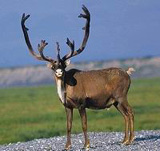
Caribou are rather large members of the deer family. Their broad,
concave hoofs spread to aid walking on
soft ground and are good for digging in snow. Both sexes grow antlers that in males serve as sexual
ornaments and weapons for fighting rivals during the breeding
season. Alaskan caribou are clove-brown
with a white neck and rump.
In Eurasia people long ago began to
tame wild caribou. Some anthropological studies suggest that this
occurred in the southern Altai mountain
region about 5,000 years ago. All domesticated reindeer may have derived from
those stocks, for modern attempts to domesticate animals from wild
caribou populations have not succeeded. It is speculated that
initially hunters learned that tamed deer on a leash could help them sneak closer to wild
herds. Later tame animals were used to pull sleds, and in some
cultures they were saddled and ridden. Eventually people kept herds
as a dependable source of food, hides and transport.
Today, all across northern Eurasia, there are Native peoples who
base their economies upon the herding of reindeer. Modern uses
include the former ones, plus commercial sales of meat and some
hides. Recently, the sale of antlers to the Orient has become
important. In the Russian Republic today, reindeer number about
2,250,000.
Different reindeer varieties have been developed in Asia to suit
local conditions and human needs, including transportation. Chukchis have a breed that appears to be the
product of longer domestication than most. Excellent for meat
production, they are not so good for pulling sleds. The Chukchis may
have begun keeping larger herds for commercial meat and hide
production in response to the 17th century arrival of Russians.
Under the Soviet system Chukotkan herders were organized into brigades, each responsible for 500 to 2,000
reindeer. Larger numbers of reindeer were kept on the Chukotsk
Peninsula and the long migrations to the west discontinued. There
are no forests on the peninsula and winter can be particularly
difficult; nearly half the reindeer died in the winter of 1984.
Life in a reindeer camp remains traditional in many ways, based
on the mutual dependence of reindeer and people. Reindeer hides supply beautiful, light and warm
clothes enabling people to work in the severe cold. Winter hides,
one of the best available natural insulators, furnish tents, provide
bedding and, sewn together with sinew,
become the winter coverings of the large round tents called
yarangas. |
|
note:
|
caribou: 北美馴鹿
concave: 凹的
hoof: 蹄
antler: 鹿角
Alaskan caribou:
阿拉斯加馴鹿
rump: 尾部
Eurasia: 歐洲大陸
tame: 馴養(yǎng)
anthropological studies: 人類學(xué)研究
Altai mountain: 阿爾泰山
domesticated: 馴養(yǎng)的
leash: 皮帶
Chukchis:
(西伯利亞東北部的)楚克其族
brigade: 隊
hide: 獸皮
| |


