Tea sage Lu Yu and his masterpiece of Cha Jing
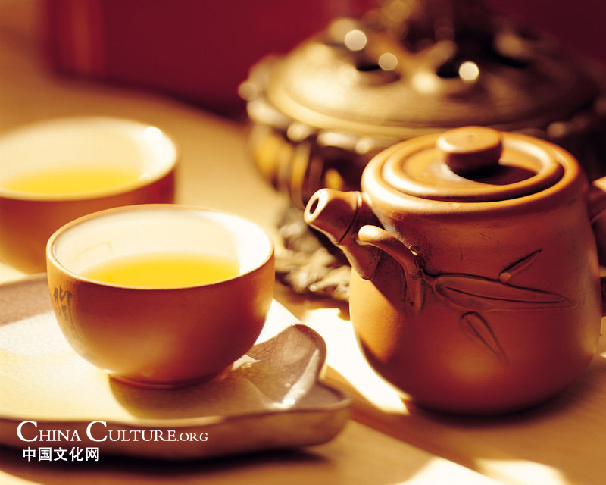
It’s often said that China boasts a sophisticated tea culture: tea was first discovered and drunk in China several thousand years ago and drinking tea has become a daily habit of the Chinese people.
 |
Over time a complicated tea ceremony has developed and when we talk about Chinese tea culture today, we shouldn’t miss an important figure in Chinese history—Lu Yu, often referred to as a “Tea Sage” for his contribution to Chinese tea culture.
Lu Yu is best known for his monumental work titled Classic of Tea - or Cha Jing - the first book on cultivating, making and drinking tea.
  |
Born in 733 AD in the Tang Dynasty (618-907AD), Lu Yu was an orphan adopted by a monk in modern day Hubei Province. At that time, drinking tea was a nationwide tradition. Though originally tea drinking appeared in Southern China, during the mid-Tang Dynasty it started to gain favor with Northern Chinese.
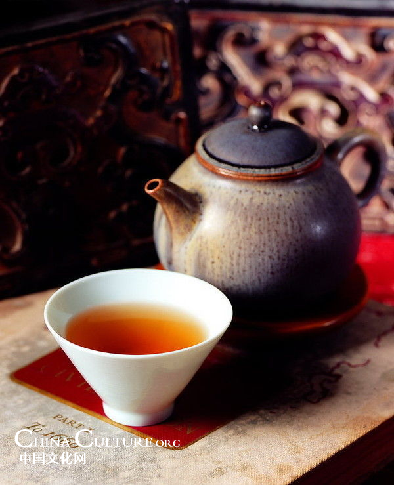
The widespread distribution of tea can be attributed to the extensive practice of Zen Buddhism throughout the whole country. Because sleeping and eating were strictly prohibited for Buddhists practicing meditation, they could only drink tea. Many monks thus became tea connoisseurs.
 |
The monk who adopted Lu Yu was a tea lover and Lu Yu prepared tea for him from childhood. As the years passed, Lu Yu’s skill at preparing tea improved and he developed a great interest in the brew. In his later years, Lu Yu withdrew from the outside world and concentrated on research into tea. The fruits of his research were written down in his masterpiece—the Classic of Tea.
The Masterpiece Cha Jing or the Classic of Tea
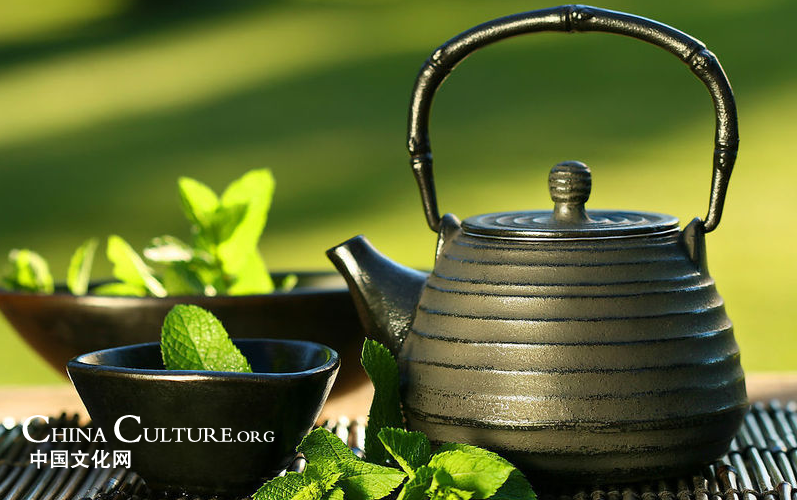
In the book, Lu Yu tried to comprehensively present all known information about Chinese tea culture. It is divided into three sections. The first one has three chapters, discussing tea and its production. The second one has one chapter, listing utensils for production. And the last one has six chapters, covering subjects from tea appraisal to old records.
 |
Perhaps of most historical value is the seventh chapter, entitled “Tea events” and records incidents concerning tea over thousands of years, from legendary times to the Tang Dynasty.
After the Tang Dynasty Cha Jing was bound into a single book and the three volumes version was no longer available.