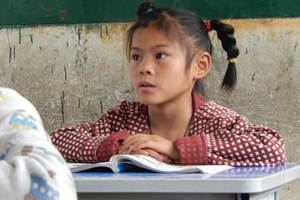
China will press to strengthen medical partnerships and arrange closer ties between top-tier hospitals and grassroots medical services to provide better health management and care for urban and rural residents.
A set of measures was approved during the State Council's executive meeting on Wednesday, presided over by Premier Li Keqiang.
"The goal for the medical partnerships is to make quality medical care more accessible to the wider public, especially in less-developed areas," Li said. "We've managed to set up nationwide medical insurance coverage and increased medical competence in grassroots medical institutions. The coverage is among the highest in the world. What we mostly need now are medical professionals."
People are demanding more and better healthcare, and the allocation of medical resources is a tough balancing act.
The idea of building partnerships across medical institutions providing different levels of care would help bridge the gap of resources. According to the National Health and Family Planning Commission, by 2016 medical partnerships had been set up in 205 cities across China.
"Currently, high quality medical resources are mostly in big cities. These should further trickle down to lower tiers so that wider demand will be met," Li said. "We must encourage joint partnerships of city level hospitals and grassroots institutions, while imposing expense reimbursements."
Wednesday's meeting yielded new measures.
Administrative fragmentation between regions, fiscal expenses, insurance payouts and human resources will be resolved. More diversified forms of medical partnerships will be encouraged, with top-tier hospitals taking on leading roles. The guidelines encourage an internet-based medical information platform to help better diagnose and prescribe treatments for rural patients.
More will be done to allocate high quality medical resources to wider regions. To do this, teams of medical professionals will be sent to less developed areas with enhanced sharing of health and medical services.
China will accelerate building a cascaded medical system and will introduce demand-oriented and contract-based family doctors. The government plans to cover all impoverished regions with such services this year while inviting private healthcare institutions to participate.
The guidelines stress better coordination systems and policies in new medical partnerships, allowing a more balanced allocation of resources across different levels of medical centers. The government will encourage diverse forms of payments and performance at grassroots levels will be included in evaluations of medical practitioners, who often can work at any organization within the partnership.
"The government needs to have well-designed, concrete guidelines to build medical consortia, taking local conditions in different regions into consideration," Li stressed. "Local governments are encouraged to have their own ideas in exploring systematic innovation."
Wang Chen, president of the China-Japan Friendship Hospital, said strengthening medical partnerships is the best approach available to improve the nation's health system.
He said medical resources remain limited, fragmented and unevenly distributed. Also medical doctors' abilities vary.
"As it's hard and time-consuming to train quality physicians, medical partnerships is the most feasible way to systemize and optimize resources available now," he said.
Contact the writers at zhangyue@chinadaily.com.cn




Copyright 1995 - . All rights reserved. The content (including but not limited to text, photo, multimedia information, etc) published in this site belongs to China Daily Information Co (CDIC). Without written authorization from CDIC, such content shall not be republished or used in any form. Note: Browsers with 1024*768 or higher resolution are suggested for this site.
License for publishing multimedia online 0108263 Registration Number: 130349