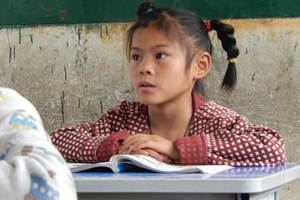
Pressure grows for upgrade to 'harrowing' housing facilities
TOKYO - Every year, more than 20,000 abused, delinquent, developmentally challenged or otherwise troubled Japanese children needing emergency housing pass through a system of shelters.
But the conditions inside many of them are so regimented that the children can find the experience harrowing, according to interviews with more than a dozen people who have stayed or worked in the facilities, as well as child psychology experts familiar with the system.
The concerns have prompted government officials to suggest that reform is needed, though there is no indication of when that will occur. Government-sponsored committees aimed at improving child welfare policies have been established, and changes to the centers will be on their agenda.
"No one thinks it's OK to keep these shelters exactly the way they are," said Yu Hamada, an official at the Ministry of Health, Labor and Welfare.
"There hasn't been any discussion to date as to how exactly they should function, and that's what we're working on."
Originally set up after World War II to provide food and shelter for wandering orphans and petty juvenile criminals, Japan's 136 shelters haven't evolved much in the past 70 years, experts say.
The children, who can be any age between 1 and 17, are usually kept indoors and away from school so that they can't run off or abusing parents can't grab them.
In many of the shelters, workers with little training impose strict rules and schedules, don't allow cellphones or toys from home, and make isolation a common punishment for misbehaving, the sources said. Stricter shelters don't allow chatting during meals or even making eye contact with other kids, the people with knowledge of the conditions said.
The shelters vary in age, size and quality. Some have gymnasiums or playgrounds and are well-stocked with DVDs and comic books; others are rundown with peeling wallpaper and old tatami mats, sleeping 10 to a room, these people said.
They are administered by child guidance centers that are part of the local prefectural and municipal governments, and have gone largely unsupervised by the central government. They are funded with local and central government money.
Despite its child-friendly image, Japan lags other advanced economies when it comes to protecting the rights of its youth in official care. A fundamental problem is a dearth of foster parents, which means a greater percentage of kids end up in some kind of group care facility than in other developed countries.
Defenders of the system say tight discipline is needed as the children come from a wide range of backgrounds and needs, and without firm control chaos would reign.
"It's communal living so we do have to set some rules," said Chikako Yoshikawa, who oversees a shelter in Tokyo. "With a limited number of workers caring for lots of children, a certain level of control is inevitable to prevent accidents."
However, Doctor Makiko Okuyama, head of psychosocial medicine at the National Center for Child Health and Development, said the shelter experience can verge on traumatic for many children. One teenage girl told her that acts of self-injury, common among sexual abuse victims, invited punishment, not counsel or treatment, from workers.
"We need to think about whether these shelters should continue to exist as they are," she said. "It's not a normal place. It's not a place where anyone should stay for more than a few days."
Reuters




Copyright 1995 - . All rights reserved. The content (including but not limited to text, photo, multimedia information, etc) published in this site belongs to China Daily Information Co (CDIC). Without written authorization from CDIC, such content shall not be republished or used in any form. Note: Browsers with 1024*768 or higher resolution are suggested for this site.
License for publishing multimedia online 0108263 Registration Number: 130349