There shouldn't need to be a debate about whether China should provide economic aid and technical assistance to other countries. Yet voices have been raised in recent years decrying China's foreign aid as an unnecessary face-saving project that it cannot afford. These naysayers argue that China is still a developing country with a large poverty stricken population and can't afford to give aid on such a large scale, and that aid is not an effective way to develop diplomatic relations as some recipient countries have turned against China.
But such arguments are false. Aside from humanitarian reasons, foreign aid to other countries is necessary for the survival and development of China. This can clearly be seen if we take the historical background into account.
Foreign aid played an irreplaceable role in helping China to break the trade embargos imposed by both the Western and Eastern blocs soon after the People's Republic of China was founded. It enabled the country to make friends and deepened mutual understanding with many other developing countries and their people.
Before reform and opening-up, China's foreign aid to other developing countries accounted for a considerable part of its national revenue and fiscal income, and was even given priority over domestic demand. Despite its own low level of economic development and post-war disorder China began to provide economic aid and technical assistance to other countries in the 1950s. Since then, China has been providing aid to the best of its ability to more than 160 countries in Africa, Asia, Eastern Europe and Latin America through assistance gratis, concessional loans and interest-free loans.
Even the "cost-neglecting" aid provided before reform and opening-up was worthwhile, as it helped to lay the foundation for the economic and trade relations with developing countries China currently enjoys. So we should be far-sighted and look to the future, as the aid the country offers today may help China's development in the future.
In this way, giving aid to other developing countries is necessary for China's own development and survival. As the world's second-largest economy, China should actively help and support the sustainable development of the least-developed and developing countries. China's prosperity will not last long in isolation.
China's national economic development faces a series of challenges: we need to shake off the country's excessive dependence on exports to developed markets, improve the export commodity structure, secure resources to carry on our industrialization, and make more direct investment abroad to improve our external assets structure. But while meeting these challenges, we also need to overcome great difficulties in the markets of developing countries, like backward infrastructure, the shortage of capital, unskilled human resources. China's official aid to developing countries can thus serve as a service platform for Chinese enterprises exploring developing markets.
On a higher level, China needs to play a larger role in international governance, sharing its development fruit with other countries will gain it support.
Admittedly, some countries that received aid in the past have turned against us, but their change of heart shouldn't affect our judgment of whether the aid attained its objectives. Also some recipient countries today have set excessively high requirements for developing trade and economic ties, but it is better not to politicize this issue, as market changes will be enough to strengthen mutual understanding.
Throughout China's history, there were well-meaning people who opposed the tribute-trade system, claiming it sacrificed the nation's wealth for the good of foreign states, unfortunately such advice only led to China's self-seclusion. We should learn from this bitter lesson and not let China's foreign-aid policy be kidnapped by a "Grandee mindset".
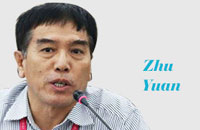
The author is a senior researcher at the Ministry of Commerce's Chinese Academy of International Trade and Economic Cooperation.
(China Daily 03/15/2012 page10)
 New type of urbanization is in the details

Copyright 1995 - . All rights reserved. The content (including but not limited to text, photo, multimedia information, etc) published in this site belongs to China Daily Information Co (CDIC). Without written authorization from CDIC, such content shall not be republished or used in any form. Note: Browsers with 1024*768 or higher resolution are suggested for this site.
License for publishing multimedia online 0108263 Registration Number: 130349