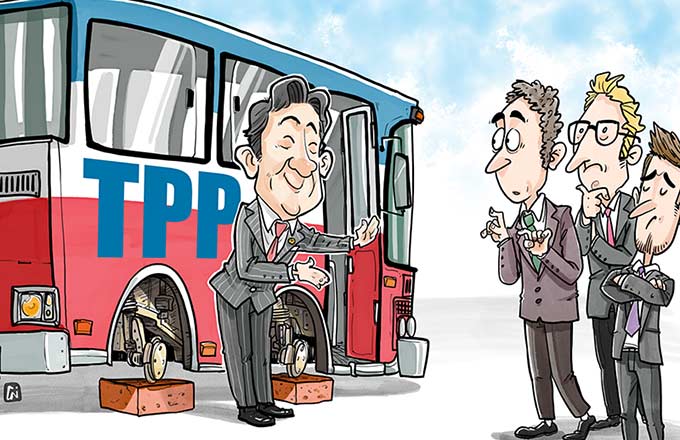
On verge of a once-in-a-century change
The National Security Agency's surveillance scandal is the first big test for Sino-US ties after presidents Barack Obama and Xi Jinping met in California early this month. Understandably, some Chinese observers already believe that cybersecurity is just the latest US tactic to try to contain China's rise. This security debacle underscores the need to restore strategic trust, which could be facilitated through US-Chinese cooperation in multipolar counterterrorism.
A power shift is in the making, and the cybersecurity issue can't stop this. In fact, the California summit between Xi and Obama heralds the transition from US hegemony to China's peaceful rise, which can be described as a once-in-a-century transition. This tradition will accelerate with the impending eclipse of the US Federal Reserve's quantitative easing.
On the eve of the California summit, Western observers compared it with the historic meeting between Chairman Mao Zedong and former US president Richard Nixon in 1972. But the comparison may not be appropriate.
When Nixon flew to Beijing, his goal was to contain Soviet expansionism. At that time, the size of the Chinese economy was only 20 percent that of the US and the Cold War was at its peak. Today, after three decades of reform and opening-up, the size of the Chinese economy is more than half of the US'. Economically, the two great powers are growing increasingly equal, and the Cold War is history.
In previous eras, the rise of new powers generated rivalries and conflicts. Some Western observers believe such frictions are inevitable during such epochs. Yet examples of such rising powers (Germany and Japan in the early 20th century) refer to countries where industrialization was overshadowed by the driving role of a strong military, when the international community was without adequate global governance mechanisms and the degree of global economic integration was low.
In contrast, China's industrialization has not been driven by the military. Global governance is improving as reforms in international multilateral organizations deepen. And global economic integration is more extensive today than any time in the past. As a result, Sino-US relations are at a "critical juncture" and what is needed is "a new type of great power relationship", as Xi has suggested. Tomorrow's Sino-US relationship must be predicated on today's nascent multipolar world.
- Snowden hits back against critics of NSA leaks
- Obama's NSA puzzle
- Officials: NSA programs broke plots in 20 nations
- NSA whistleblower heading to Chinese mainland?
- NSA leaker: I'm neither traitor nor hero
- US spy agency seeks criminal probe into NSA leak
- US NSA chief defends surveillance programs
- NSA scandal
- NSA leaker is free man in HK-for now
- US group challenges NSA phone surveillance