It is encouraging to see some Chinese practice "thrift" in their own ways. For example, a company in Xiangyang, Hubei province, has set up a unit near the city's wastewater treatment plant. It recycles the sludge from the wastewater treatment plant in its bio-digesters to produce purified methane, which powers one-third of the city's taxis. Had it not done so, the methane - which is a 25 times more potent than carbon dioxide over a 100-year timeframe - from the wastewater treatment plant would have polluted the atmosphere.
The bio-digester system has also saved thousands of gallons of gasoline from being consumed by the city's cabs. Besides, the residue from the sludge treatment is a good organic compost, which nearby farms sell with seedlings. The compost helps trees and plants to grow up into forests, which are of an important element of the ecosystems performing its functions to serve the human wellbeing and purify the environment.
But such a "thrifty" production-consumption practice is still weak in China. Government support, along with good technology that could cost more than conventional production facilities, is needed to make this practice widespread. The resultant products require a supportive market and should enjoy the same benefits that goods produced by monopolies do.
A "thrifty society", however, cannot be built without individuals' involvement. To begin with, people should stop wasting food on the dinner table, especially because media reports say the amount of food wasted in China every year could feed 200 million people for a year.
A good example of conservation, for instance, was provided by a study my son and his high school friends carried out five years ago on the use of water in Beijing. All the members of the households they interviewed (60 in total) used the same bucket of water at least three times - to wash rice, wash vegetables and clean the floor. Perhaps they were conscious of the preciousness of water because of their income level, but the practice didn't affect their quality of life. The boys who carried out the study were so impressed by the households that they changed their own wasteful behavior.
Many similar practices can still be found in China and should be promoted vigorously to save precious resources and the environment, and help build a "thrifty" society.
Both at the individual and societal level, building a "thrifty society" is a matter of ethics. If we view society as a system, the result of the input-output loop is nothing but depletion of limited resources and damage to the environment, making life even more difficult for our future generations. And caring for future generations by leading a "thrifty" life is part of traditional Chinese culture, a culture that is rich in reason and values, and has no place for waste.
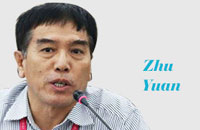
The author is China country director of World Resources Institute.
 New type of urbanization is in the details

Copyright 1995 - . All rights reserved. The content (including but not limited to text, photo, multimedia information, etc) published in this site belongs to China Daily Information Co (CDIC). Without written authorization from CDIC, such content shall not be republished or used in any form. Note: Browsers with 1024*768 or higher resolution are suggested for this site.
License for publishing multimedia online 0108263 Registration Number: 130349