It is actually not that difficult to figure out why the introduction of a tax-sharing system has met resistance below the provincial level. The organizational system of local governments in China is divided into provincial, prefecture-city, county that also includes county-level city and township levels. These, together with the central authority, form a five-layered tax-sharing system, which adds to the technical difficulties of allocating more than 20 categories of taxes among the different levels of authorities. It is no wonder then, that from 1994 onward, the tax-sharing system has achieved concrete results only at the central and provincial levels. Therefore, as the country presses ahead with taxation reform, the current tax-sharing structure must be reduced to three layers, with county-level finance placed directly under the management of provincial governments and township-level finances under the management of county governments.
To deepen tax-sharing reform within a three-layered framework and better the finance relations between central and local governments, policymakers need to reasonably decentralize power among governments at all levels and proceed with building a fiscal and taxation system that matches financial power with corresponding responsibilities. This system should be supplemented with transfer payments, mostly from central to local governments, but also from one region to another. With such a system in place, the whole country, including the least developed regions, would have the financial resources needed to curb debts and reduce local governments' reliance on land sales, while promoting public services and easing the financial difficulties of grassroots governments.
The establishment of such a system entails various tasks, the first of which is specifying the respective and shared responsibilities of authorities at central, provincial and city levels. Measures should also be taken to speed up the interlinking and upgrading of e-government projects, such as the Golden Tax and Golden Finance projects, which will help optimize the distribution of public resources and serve as an information sharing platform for different government sectors.
Of course, fiscal and taxation reform will not be completed at one go and must be pursued step by step. At the moment, the process of replacing the business tax with a value-added tax obviously outpaces the process of designing new tax categories for local governments, which calls for a transitional plan. The introduction of new consumption tax categories in the area of circulation tax should be an option, which can optimize production and adjust consumption structure and ensure the source of income for local governments. Resources tax, environmental tax and property tax and personal income tax are all areas in which reform efforts should be phased in.
The fiscal and taxation reform, aimed at optimizing and reshaping the fiscal relations between central and local governments is inevitable in the context of economic restructuring and social transformation. Local governments have to fully realize this and actively interact and cooperate with the central government to work out viable solutions and blaze a trail for more imperative pilot reforms.
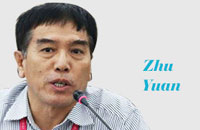
The author is director of the Research Institute of Fiscal Science under the Ministry of Finance
(China Daily 11/04/2013 page9)
 New type of urbanization is in the details

Copyright 1995 - . All rights reserved. The content (including but not limited to text, photo, multimedia information, etc) published in this site belongs to China Daily Information Co (CDIC). Without written authorization from CDIC, such content shall not be republished or used in any form. Note: Browsers with 1024*768 or higher resolution are suggested for this site.
License for publishing multimedia online 0108263 Registration Number: 130349