To overcome this problem, the plenum decided to establish a distribution mechanism for value-added income from land that takes into account the State, the collective and the individuals, and improve individual benefits reasonably. More detailed rules are needed to establish such a distribution mechanism, which cannot be done just by increasing the compensation to farmers for acquisition of land.
Changing the way of land acquisition cannot increase the income of all farmers. Land planning will become more stringent, and farmers will not be allowed to turn agricultural land into construction land at will. This means land planning and land ownership will get equal importance. Farmers cannot transfer their homes or construction land to a party and then ask their village committees to allocate them plots to build new houses for free, nor can they turn agricultural land into construction land at will.
The plenum document's emphasis is on two types of farmers' property rights: personal property right such as homes, and rural collective property rights such as collectively owned construction land.
Considering land liquidity, strict planning for land use and the existence of collectives, increase in income from property has different meanings for different farmers. A farmer living close to a city can get greater returns from his land because its value will appreciate faster and higher, but since he is more likely than not to be integrated into the urban economy, he would like to retain his land to ensure sustainable income. A farmer in a remote area, on the other hand, will find it difficult to turn his land into a profitable asset.
It is thus evident that farmers' income from property (land) will not see a drastic rise in the immediate future because of the plenum's decision. Also, the plenum document does not make them eligible to buy houses in cities or create a situation in which farmers will lose their property and become destitute and homeless.
Because of the differences in amenities in urban and rural areas, many farmers want to become city dwellers. But becoming urban residents means that farmers have to give up their rural properties. For example, a farmer who gets an urban hukou (household registration) cannot own land in the countryside nor can he own rural collective assets.
That might not have been a problem in the past when rural assets were cheap and urban life was too attractive to resist. But with the increase in the price of rural land, appreciation of rural collective assets and the weakening lure of urban hukou, many farmers are no longer willing to give up their rural properties just to live in cities.
The plenum document says the authorities will protect farmers' rights as members of collective economic organizations, and ensure that they enjoy the right to own, profit from, transfer, mortgage or inherit their share in collective assets. This initiative is important for the promotion of urbanization and increasing agricultural productivity. It will make it easier for farmers in areas with good land liquidity to use land as collateral to get loans from financial institutions for agricultural production.
But we should know that the plenum's decision will take a long time to bear fruits, that is, to raise farmers' income from property.
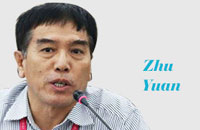
The author is a research scholar with the Institute of Sociology, Chinese Academy of Social Sciences.
(China Daily 12/10/2013 page9)
 New type of urbanization is in the details

Copyright 1995 - . All rights reserved. The content (including but not limited to text, photo, multimedia information, etc) published in this site belongs to China Daily Information Co (CDIC). Without written authorization from CDIC, such content shall not be republished or used in any form. Note: Browsers with 1024*768 or higher resolution are suggested for this site.
License for publishing multimedia online 0108263 Registration Number: 130349