|
|
Taiwan's main opposition Democratic Progressive Party, DPP, Chairperson Tsai Ing-wen speaks during a press conference in Taipei, Taiwan, Wednesday, April 15, 2015. [Photo/IC] |
As Tsai Ing-wen, chairwoman of the pro-independence Democratic Progressive Party in Taiwan, prepares for her inauguration on Friday, many are keeping a close eye on whether or not she will face up to the 1992 Consensus in her speech.
Her choice, be it advocating the one-China principle or equivocating about the consensus in fresh pursuit of the island's "formal independence", will mark a turning point in cross-Straits relations. The former will cement the peaceful development shared by both sides of the Taiwan Straits over the past eight years, while the latter will undermine that good momentum.
That Tsai has stressed the need to "preserve the status quo" in cross-Straits ties while avoiding questions about her stance on the 1992 Consensus (under the name of respecting Taiwan people's decision), indicates that she is inclined to take the second path, as much as she craves and needs the dividends of the eight-year-long peaceful exchanges.
On its part, the mainland will not give up persuading the DPP to adhere to the 1992 Consensus, but it has also prepared for the worst-case scenarios, which are very likely to happen given Tsai's long-time advocacy of "independence" as well as her latest equivocal remarks.
Taiwan's participation in the upcoming World Health Assembly from May 23 to 28 in Geneva as an observer, to a point, will offer an indication of whether the island's new leadership takes the 1992 Consensus seriously.
The one-China principle, that both the mainland and Taiwan are parts of one China, has been widely recognized among the international community and is also reflected in the UN General Assembly Resolution 2758. Taiwan's participation in the WHA since 2009 has been a special arrangement based on the one-China principle and relevant WHA resolutions.
The principle stands on firm legal ground at home and abroad and has been made clear even in Taiwan's "constitution". It is neither part of the "political restrictions" nor an "interference" from the mainland as the DPP recently extorted.
Claiming that Taiwan's participation in the WHA has nothing to do with the one-China principle, the DPP has attempted to make a mountain out of a molehill.
True, the timing is a bit delicate because the island was invited to the meeting under the Kuomintang's eight-year rule, and will be represented by the pro-independence DPP in Geneva a week later. But that does not change the fact that both the mainland and Taiwan belong to one China.
Such being said, should the DPP representatives seek to challenge or protest against the principle in Geneva, the party's promise to maintain the status quo will be seen as being no more than lip service to the voters that favor it. Tsai and her party should drop the fantasy of muddling through and properly endorse the one-China principle for the betterment of Taiwan people's livelihoods.
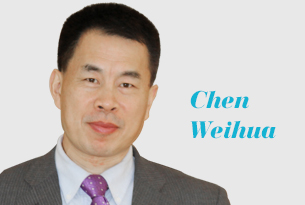
The author is a professor at the Institute of Taiwan Studies, Beijing Union University.



I’ve lived in China for quite a considerable time including my graduate school years, travelled and worked in a few cities and still choose my destination taking into consideration the density of smog or PM2.5 particulate matter in the region.
Copyright 1995 - . All rights reserved. The content (including but not limited to text, photo, multimedia information, etc) published in this site belongs to China Daily Information Co (CDIC). Without written authorization from CDIC, such content shall not be republished or used in any form. Note: Browsers with 1024*768 or higher resolution are suggested for this site.
License for publishing multimedia online 0108263 Registration Number: 130349