|
|
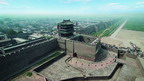
The photo shows Mianshan Mountain in Shanxi province. [Photo provided to China Daily] |
"They look so beautiful, so peaceful. It could be a Greek Island - is it Mediterranean or Middle Eastern?" These were the responses to images of three villages – Zhangbi, Qikou and Xiwan – I shot during a recent visit to western Shanxi.
There, in the land of the Yellow Earth, bordered by the Yellow River, was history set in stone, for indeed stone featured prominently - narrow sometimes covered alleys were paved in stone blocks.
Stone and local brick lined the exteriors of homes, temples and commercial premises along with outer walls partially enclosing the villages. If only stones could talk what a story they could tell for the townships regionally were within the 'Cradle of Chinese Civilisation', at the crossroads of dynasties, armies, traders, pastoralists and now travellers finding something unique beyond mass-tourism destinations. Imagine the people over many generations who have walked through these villages!
Zhangbi, at 1040 metres above sea level on the lower slopes of Mianshan Mountain, traces itself back to the ancient Xia that originated in today's Ningxia - a region easily reached by expressway though historically the Yellow River formed a water route from northwestern China for sheepskin rafts as far as Qikou where cataracts prevented onward passage.
Sitting high on an artificial platform above potential flooding Qikou thrived for centuries as a transshipment point before the advent of modern transportation. Merchants prospered, their wealth spreading along nearby Qiushuihe River to smaller more inland settlements such as Xiwan.
Walking through seemingly timeless alleys it became obvious to me that the villages shared a problem common across China, and indeed worldwide - few young people, the seemingly inevitable drift to the cities. Too often a self-fulfilling cycle sets in - a feeling of hopelessness, that the villages are dying. The temptation is to pull down, abandon, rebuild or go for mass-tourism projects.
However this does not have to be the case, as examples around Beijing have shown. Preservation and indeed restoration of historic villages requires a careful balance.American planner and architect Jim Spear transformed declining villages at Mutianyu and Yanqing into nationally and internationally acclaimed examples of sustainable development while stimulating local growth.
Utilising nearby resources, the concept is to employ and motivate locals into feeling they have a stake in the development - that small can be beautiful, can be successful and can work.



Copyright 1995 - . All rights reserved. The content (including but not limited to text, photo, multimedia information, etc) published in this site belongs to China Daily Information Co (CDIC). Without written authorization from CDIC, such content shall not be republished or used in any form. Note: Browsers with 1024*768 or higher resolution are suggested for this site.
License for publishing multimedia online 0108263 Registration Number: 130349