Balance interests in globalization
 |
|
A Thai customs official holds handbags with fake brand names at Thai Customs headquarters in Bangkok, Thailand, Jan 16, 2015.[Photo/Xinhua] |
Following its previous forecast that slowed its expectation for this year's global trade growth from 3.9 percent to 2.8 percent, the World Trade Organization has lowered it further to 1.7 percent in its most recent forecast, pointing out that this year's global trade growth will be the worst since the 1980s.
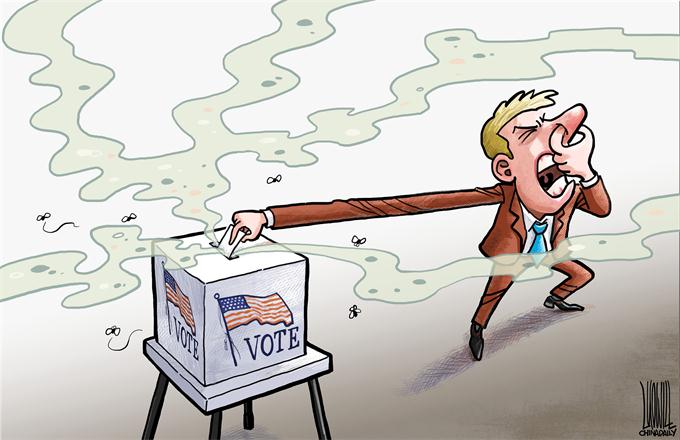
The slowed global trade growth for consecutive years, along with a series of events such as the United Kingdom's ongoing divorce from the European Union and the large-scale protest in Germany against the Transatlantic Trade and Investment Partnership, are manifestations of the anti-globalization trend.
Given that its own interests are usually what concerns a country most, the emerging anti-globalization sentiment can be largely attributed to the imbalanced distribution of interests among countries under globalization.
Take the planned Transatlantic Trade and Investment Partnership as an example. European countries believe that it will be dominated by the United States and thus their interests will be undermined. Brexit, the refugee issue, and the rising terrorism and populism in Europe have also shown the wide discontent at the established interest distribution pattern under globalization.
China has largely been a beneficiary of globalization and it continues to promote it. But it needs to take into consideration how to maximize its interests. Given that China's economic development in the future will be more dependent on technology, it should consider how to boost technological innovation in the process of globalization.
As China's key partner in technology cooperation, European countries account for 30-40 percent of China's technological cooperation with foreign countries. Compared with the United States and Japan, Europe usually holds a more open approach to Chinese investments and enterprises.
China has gradually transformed itself from being a passive acceptor of the global rules to a maker of them. However, in any effort to promote globalized cooperation China should work with other countries to strike a balance among the interests of different countries to sustain such kind of cooperation.