How does the Chinese government view recent changes in the foreign exchange rate of the renminbi?
Editor's note: During the two sessions, China Daily has collected questions foreign netizens care most about and solicited answers from experts, CPPCC National Committee members and NPC deputies.
How does the Chinese government view recent changes in the foreign exchange rate of the renminbi? Will it continue to push market-driven reform of the exchange rate regime or will it increase regulation?
 |
|
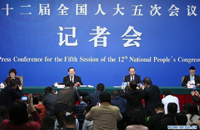
Yi Gang, deputy governor of the People's Bank of China [Photo/China Daily] |
The renminbi has been included in the International Monetary Fund's special drawing rights basket since October, marking a milestone in the internationalization of the currency.
Internationalization and greater use of the renminbi in cross-border trade and investment will be an outcome of the continued market-driven reform of the exchange rate regime.
Over the past two years, the currency has been under depreciation pressure. The Chinese central bank has maintained the currency's flexibility by adopting a managed floating exchange rate regime. The central bank has adjusted the exchange rate against a basket of currencies, based on supply and demand in the market.
China has developed an exchange rate mechanism and a form of macroeconomic management with its own characteristics. The mechanism is becoming more mature as we gain more experience.
Last year, many countries, especially emerging economies, saw their currencies correct substantially against a stronger US dollar. The renminbi also depreciated against the dollar, but the magnitude of the depreciation was the smallest among emerging market currencies.
China will neither devalue the renminbi to boost exports nor engage in trade wars with others. As a responsible country, we will keep the exchange rate basically stable.
- Market expectations stable for RMB exchange rate: Central bank official
- RMB Exchange Rate Fluctuations: Influencing Factors and Development Momentum(Special Issue, No.1, 2017)
- Stricter financial supervision needed before exchange rate flows freely
- Stabilizing exchange rate
- Yuan exchange rate hits 6-year low amid volatility of other currencies
- Chinese premier says RMB exchange rate to stay basically stable