
The China Story
at your Fingertips
OPEN
 The China Storyteller Partnerships is a content co-creation mechanism for foreign content creators like foreign influencers, journalists, and expats from different countries, languages, cultural backgrounds, who have a connection with China. Through participating in themed interviews and exchanges on topics such as technology, culture, "sports, scenery, food, fashion, and travel, as well as cultural exchanges and creative training, high-definition photos, commentary articles, vlogs, themed music, and illustrated posters from their perspective will be created and published by them.
By leveraging the advantages of China Daily's integrated media and three-dimensional communication matrix, this mechanism aims to build a platform for the members to collaboratively create Chinese stories, share resources and grow together.
The China Storyteller Partnerships is a content co-creation mechanism for foreign content creators like foreign influencers, journalists, and expats from different countries, languages, cultural backgrounds, who have a connection with China. Through participating in themed interviews and exchanges on topics such as technology, culture, "sports, scenery, food, fashion, and travel, as well as cultural exchanges and creative training, high-definition photos, commentary articles, vlogs, themed music, and illustrated posters from their perspective will be created and published by them.
By leveraging the advantages of China Daily's integrated media and three-dimensional communication matrix, this mechanism aims to build a platform for the members to collaboratively create Chinese stories, share resources and grow together.
Ahead of International Museum Day on May 18, an American reporter and a Russian blogger go on a fun relic scavenger hunt at the Han-Wei Luoyang Ancient City Site Museum. Come and see the incredible ingenuity of ancient Chinese people!
The Meet in Zhongyuan, Discover China through Henan – 2026 China Storyteller Partnerships Henan Tour was held in Zhengzhou, Henan province this week.
Under the theme of "Witness the Backbone of Manufacturing, Experience the Splendor of Ancient Capitals", the tour brought together international journalists, foreign online content creators, and Chinese and foreign experts to experience a dynamic and innovative China.
Below is some of what the delegation discovered in Zhengzhou.


During the 2026 China Storyteller Partnerships Henan Tour, we visited a "robot school", the Central Plains Humanoid Robot Training Facility. The facility, which covers over 10,000 square meters, trains 149 robots of various types to unlock new skills. Let's take a look at how robots are "schooled"!

International journalists, content creators and experts embarked on an immersive journey to experience a dynamic and innovative China.
Titled "Meet in Zhongyuan, Discover China through Henan — 2026 China Storyteller Partnerships Henan Tour", the five-day event brings together over 20 participants as they start their visit to Zhengzhou and Luoyang. The group will explore advanced manufacturing clusters, inland transportation hubs, UNESCO World Heritage Sites and time-honored ancient cities, and create content for global audiences.
Geoff Thompson, editor-in-chief of Luxembourg-based media G-Media Sarl, noted that his previous trip to Henan was an eye-opener, leaving him deeply impressed by the province's economy as well as cultural heritage.
"Two years later, I am thrilled to be back, and I am fascinated to see how the country, the province and the region have changed, including both Zhengzhou and Luoyang, and getting to know many fellow journalists and content creators," he said.

Thomas Jay Hopkins, an American reporter with China Daily, emphasized that firsthand experience is irreplaceable for understanding China.
"The essence of China is held within the people and the culture they are eager to share, something that can only be appreciated through firsthand experience," he said.
Following the ceremony, participants enjoyed an evening stroll with boat trip at Ruyi Lake, and a performance was held, which Russian content creator Ira Nova called "spectacular".
Her impression was echoed by Lithuanian content creator Julia Bosianok, who described the river performance as "magical and very advanced".
"This show weaves dance, martial arts and history into the experience, giving me a real taste of local culture that you can't get from just watching the skyline," she said.
Egyptian content creator Ahmed Elseny, who has lived in China for eight years, shared his thoughts on his mission and the impressions of China's technological development.
"My mission is to act as a bridge, bringing the reality of China's technological leaps to my audience," Elseny said. He added that the precision engineering at the BYD factory and the powerful performance he experienced on the track are clear evidence of Chinese excellence.
"I'm thrilled to share these insights with my followers and highlight how brands like BYD are setting new benchmarks for the world," he noted.
"I loved learning about the Zhengzhou Airport Economic Zone and how it helps China manufacture, assemble and export the products so efficiently. In addition, the businesses that were established there, like the BYD factory. Its size really impressed me," Spanish vlogger Rodriguez Pascual Noelia said.
"It feels like stepping into the heart of old China — ancient yet surprisingly alive. I'm really hoping to see the real Henan next. The old streets, the local food, those grottoes everyone talks about, and I'm especially looking forward to going to Luoyang!" Nova said.
"I found Henan full of vitality and rapidly transforming into a modern, strong province, including advanced manufacturing. Especially after witnessing with my own eyes its role as an international railway hub connecting the world, I am more convinced that Zhengzhou and Henan are emerging as global centers," Choi Heon-kuy from NewsPim, a South Korea news and media agency, said.
Co-hosted by China Daily, the Information Office of the Henan Provincial Government, and Henan Daily, the tour leverages global voices to present a comprehensive, authentic image of Henan as both a cradle of Chinese civilization and a dynamic engine of modernization.


As part of the 2026 China Storyteller Partnerships Henan Tour, a delegation of foreign content creators and overseas journalists visited the Mixue headquarters in Zhengzhou for an immersive exploration of the Chinese national-trend beverage brand. Let's explore what they discovered during the tour.
A five-day storytelling event bringing together nearly a dozen international journalists and content creators kicked off in Zhengzhou, Henan province, on Monday, with participants sharing expectations for deeper firsthand engagement with Chinese culture, industry and new media trends during the trip.
The "Meet in Zhongyuan, Discover China Through Henan – 2026 China Storyteller Partnerships Henan Tour", which runs through Friday, is jointly organized by China Daily, the Information Office of the Henan Provincial Government, and Henan Daily.
Journalists, experts and content creators from countries including the United States, Luxembourg, Vietnam, South Korea, Spain, Russia, Lithuania and Egypt are taking part in the event.
According to organizers, the tour will take participants along two main routes across Henan — one tracing the backbone of China's manufacturing industry and technological innovation, and the other exploring the ancient capitals.
"The essence of China is held within the people and the culture they are eager to share, something that can only be appreciated through firsthand experience," said Thomas Jay Hopkins, who came to China about eight months ago.
Hopkins, a reporter with China Daily, also noted the rapid rise of China's micro-drama industry, describing it as an emerging media format distinct from traditional television and film. "It's a major economic driver right now, attracting huge audiences and generating substantial revenue," he said.
"I know AI is also widely used in micro-drama production, and this is definitely a growing trend," he added.
At the launch ceremony, some participants also shared their views on the use of artificial intelligence in media production.
Geoff Thompson, editor-in-chief of G-Media Sarl in Luxembourg, said he has instructed staff members to view AI as an aid but not to rely on it for writing tasks. "We can use AI translation tools like Google Translate just to understand reference materials," Thompson said."But when it comes to creating original content, we do not use AI, and we do not use any AI content generation tools."
"We launched the China Storyteller Partnerships in 2023 as a warm, vibrant home for content creators worldwide — a platform for foreign journalists, experts and social media creators who are passionate about China to share their stories," said Xing Zhigang, deputy editor-in-chief of China Daily.
According to Xing, the partnership has since expanded into a network of members from nearly 50 countries, including the US, the United Kingdom, France, Germany, the Netherlands, Spain, Turkiye and Mexico.
Ping Ping, head of the Information Office of the Henan Provincial Government, described Henan as a province steeped in history with a strong economy. She said the province is eager to collaborate with international creators in telling authentic Henan stories to global audiences.
"Let foreign journalists, experts and content creators speak and see for themselves, so they can present an innovative, open and civilized Henan to the world," she said.
"My visit to Henan in 2024 was an eye-opener, both regarding the economy as well as cultural heritage," said Thompson, adding that he was excited to return and see how the province had changed.
Spanish vlogger Rodriguez Pascual Noelia, who has lived in China for six years, said this was her third visit to Henan.
"I'm really glad to be here, and eager to learn more about this ancient northern capital and the heritage of the Song Dynasty (960-1279)," she said. "I'm looking forward to exploring more about this province."

At the Longmen Grottoes in Luoyang, Central China's Henan province, conservation workers armed with geological radar, infrared detectors and 3D modeling technology are racing against time to preserve a great Chinese cultural treasure.
The carvings at this UNESCO World Heritage Site began in the Northern Wei Dynasty (386-534) and continued during the Western Wei Dynasty (535-556) to the Five Dynasties and Ten Kingdoms (907-960) period. The Longmen Grottoes is made up of more than 2,300 caves and niches and over 100,000 Buddhist statues. But after centuries of weathering, water seepage and microbial erosion, protecting the stone carvings has become an increasingly urgent task.

Today, the Longmen Grottoes is a vivid example of Henan's efforts to strengthen cultural heritage protection and ensure the continuity of Chinese civilization through both technological innovation and systematic preservation.
"Protection is the theme of cultural heritage work. It always comes first," said Yu Jie, Party secretary of the Longmen Grottoes Research Institute. He said that the responsibility of the institute is not only to preserve these treasures, but to pass them on and communicate their value to future generations.

In recent years, the institute has accelerated scientific conservation efforts. A new cultural relic protection technology center equipped with six specialized laboratories now supports research into rock weathering, seepage damage and microbial growth affecting the grottoes.
"We have shifted from primarily rescue-oriented protection to preventive and systematic protection," said Ma Chaolong, a specialist at the Grottoes Protection Research and Heritage Monitoring Center, Longmen Grottoes Research Institute.

At key sites such as Guyang Cave and the Binyang Caves, conservators have introduced upgraded anti-weathering materials and suspended scaffolding systems that minimize direct contact with the cliff walls during restoration work.
Researchers are applying advanced technologies including portable Raman spectroscopy, X-ray fluorescence and geological radar for nondestructive analysis, while 3D printing technology has been used to reinforce cave structures.
Digital technology is also reshaping public access to the ancient site. The institute has completed high-precision 3D mapping of the grottoes and launched virtual reality cave tours, livestream programs and digital exhibitions, allowing audiences worldwide to experience Longmen online. Through digital exhibitions and online communication, the institute is making the cultural value of Longmen more visible and easier for students and children to understand.

Talent cultivation has become another major priority. In 2025, the institute recruited 17 new professionals specializing in fields such as materials science, chemistry and geology, marking the largest intake of technical talent in its history. Five additional doctoral candidates are being jointly trained with Zhengzhou University to strengthen the next generation of conservation specialists.
The preservation of Longmen Grottoes reflects broader efforts underway across Henan, one of the birthplaces of Chinese civilization. In recent years, the province has advanced the project tracing the origins of Chinese civilization while strengthening research and protection of oracle bone inscriptions, bronze culture and major archaeological sites. These include the Zhengzhou Shang Dynasty (c. 16th century-11th century BC) city site and the Sui (581-618) and Tang (618-907) dynasties Luoyang city site.

Henan has also worked to improve cultural relic protection regulations and promote the transformation of heritage preservation from "passive protection" to "active inheritance". This combines conservation with public education, digital communication and cultural innovation.
From the towering Longmen Grottoes in Luoyang to the oracle bone inscriptions of Anyang, Henan province is turning its profound historical legacy into a vibrant engine for tourism growth, cultural revival and public well-being.
As one of the cradles of Chinese civilization and home to the Yellow River ancient capitals cluster, Henan is leveraging heritage to build its national cultural tourism brand, while accelerating the integration of culture and tourism into a pillar industry that benefits both urban and rural communities.

Stretching along the middle and lower reaches of the Yellow River, Henan served as the political and cultural heartland of ancient China. More than 20 dynasties established capitals in Henan, leaving behind monumental sites such as the Erlitou Ruins, believed to be the capital of the middle and late Xia Dynasty (c. 21st century-16th century BC), in Luoyang; the Shang Dynasty capital ruins in Zhengzhou; the Yinxu Ruins, the late Shang capital, in Anyang; and the Northern Song Dynasty (960-1127) capital in Kaifeng.
Today, these former capitals are no longer silent relics of the past. Through digital technologies, immersive performances, museum upgrades and heritage conservation projects, they are being transformed into dynamic cultural destinations attracting visitors from around the world.
Longmen Grottoes welcomed 8.51 million visitors in 2025 and is expected to receive more than 9 million this year. Benefiting from China's 10-day visa-free transit policy, the number of overseas visits to the site in 2025 has surged eightfold from 2024.
In Anyang, the Yinxu Ruins is home to China's earliest known writing system: jiaguwen, or oracle bone inscriptions. It has become a key destination for visitors seeking to explore the origins of Chinese civilization. Interactive exhibitions and live performances recreate Shang Dynasty rituals and storytelling traditions, bringing ancient history to life.
Henan Museum in Zhengzhou, one of China's earliest museums, has also become a major cultural landmark. Housing more than 170,000 artifacts, the museum showcases relics ranging from an 8,000-year-old bone flute to Shang bronze ware and Tang Dynasty treasures, offering visitors a panoramic view of Chinese civilization.
To strengthen the cultural tourism sector, Henan has rolled out a series of policies and development plans. Provincial authorities have issued guidelines for building Yellow River Ancient Capitals cultural tourism and introduced measures to stimulate tourism consumption and foster new cultural business models.
The province is also cultivating emerging sectors including immersive performances, digital cultural products and creative tourism experiences. Henan enterprises in cultural and related industries above designated size generated revenue of more than 224 billion yuan ($32.9 billion) in 2025, while the revenue of new cultural business formats reached 51.3 billion yuan with a year-on-year increase of 27.5 percent.
Tourism is increasingly becoming a source of employment and rural vitalization. From homestays and cultural workshops to intangible heritage performances and countryside tourism projects, local residents are finding new opportunities linked to the booming visitor economy.
Across the province, themed campaigns such as Henan, Where China Began and the 2025 Weibo Travel Night are helping traditional culture resonate with younger audiences and international travelers alike.
Henan has also strengthened its global outreach. In 2025 alone, the province hosted multiple international tourism and cultural promotion events and organized overseas marketing campaigns targeting key markets. The province received 935,000 overseas visits in 2025, up 60.5 percent year-on-year.
Meanwhile, new media platforms are amplifying Henan's appeal. Videos, livestreams and social media campaigns centered on archaeology, museums and ancient capitals have generated billions of online views, helping the province build a fresh and accessible cultural image.
For many visitors, traveling through Henan is not only a journey through ancient capitals but a way to understand the continuity of Chinese civilization. As heritage sites are revitalized and tourism development reaches deeper into communities, Henan is demonstrating how cultural preservation can generate economic vitality, enrich public life and strengthen cultural confidence.
fanzitong@chinadaily.com.cn

From offshore wind power and new energy vehicles to aerospace and shield tunneling machines, high-end bearings by Luoyang Bearing Group are replacing imported products in sectors once dominated by international manufacturers.
According to the China Bearing Industry Association, LYC has an irreplaceable role in the industrialization and self-supply of high-end equipment and major products in China. The company's rise mirrors the broader transformation underway across Central China's Henan province, where innovation-driven manufacturing and expanding global connectivity are reshaping one of China's industrial heartlands.
One of LYC's most notable achievements lies in wind power bearings. In the late 1990s, China's wind turbine bearings were heavily dependent on foreign suppliers. Today, LYC has emerged as a global leader in the sector.
According to Dong Hanjie, assistant general manager of LYC, its breakthrough came with the development of 16-megawatt offshore wind turbine main shaft bearings, regarded as a landmark achievement in China's wind power equipment industry. The product has been installed in the world's first mass-produced 16-MW offshore wind turbine platform and has withstood multiple typhoons during operation.
"When it comes to the manufacturing of main shaft bearings for 16-MW offshore wind turbines, we have gone from playing catch-up to keeping pace with the global leaders, and are now leading the way," said Dong.
According to the company, LYC now holds one of the world's largest market shares in wind turbine main bearings, while the market share of traditional foreign manufacturers in China has steadily declined.
The company has also made rapid advances in the booming new energy vehicle sector. Its wheel hub bearings are used in vehicles produced by leading Chinese automakers.
Inside its intelligent manufacturing workshops, fully automated production lines can complete a wheel hub bearing every 15 seconds, while digital inspection systems conduct real-time monitoring throughout the manufacturing process. Workers on the production floor are now primarily responsible for equipment maintenance and system management rather than traditional manual operations, reflecting the company's transition to intelligent manufacturing.
Dong said that engineers at LYC overcame key technical challenges involving low-friction torque and high-sealing performance. These are two critical but often conflicting requirements for improving vehicle energy efficiency and durability. The technological breakthrough helped the company quickly gain market recognition from domestic automakers including BYD.
In the Zhengzhou Airport Economy Zone, or ZAEZ, just over 100 kilometers from Luoyang, BYD's massive production base has become another example of Henan's manufacturing upgrade. Rows of newly assembled electric vehicles continuously roll off production lines before being transported via the China-Europe freight train service, sea and highways to overseas markets including Central Asia.
The rapid rise of the Automobile City in the ZAEZ highlights Henan's role in China's new energy vehicle supply chain. Supported by an increasingly complete industrial ecosystem covering batteries, auto parts, logistics and smart manufacturing, the province is accelerating the formation of advanced manufacturing clusters.
Henan's strategic location at the intersection of several major transport corridors has also strengthened its role as a national logistics hub. The ZAEZ's new energy vehicle export distribution center adopts dedicated channels, China-Europe Railway Express services and one-stop customs clearance. It has shortened the export lead time of complete BYD vehicles to Europe to 12 days, a cut of over 40 percent.
From high-end bearings to electric vehicles, Henan is steadily building a more innovation-driven industrial structure. Official data show the province's industrial economy has maintained steady growth momentum in recent years, with advanced manufacturing and strategic emerging industries becoming key growth drivers.
In 2025, the province's industrial value added from enterprises above designated size grew by 8.4 percent year-on-year.
The province has also intensified efforts to build smart factories, digital workshops and green manufacturing systems. Enterprises are increasingly integrating industrial internet platforms, big data and artificial intelligence technologies into production processes to improve efficiency and reduce energy consumption.
Products manufactured in Henan are now reaching global markets through a growing network of open platforms, including Zhengzhou Xinzheng International Airport, bonded zones and cross-border e-commerce channels.
From giant bearings supporting offshore wind turbines to smart factories producing next-generation electric vehicles, Henan's industrial transformation offers a vivid illustration of how China's inland provinces are moving from traditional manufacturing toward innovation-led, globally connected development.
fanzitong@chinadaily.com.cn

A general swears an oath to his troops: anyone who tramples the wheat will die. Moments later, his own horse bolts, flattening the precious stalks. The stage — dark, charged — holds its breath. To honor his word without sacrificing his life, the warlord Cao Cao draws his sword, seizes his hair, and slices. In ancient China, cutting one's hair was almost as shameful as losing one's head. With that single gesture, 1,800 years collapse. For a moment, the boundary between stage and history blurs. The field beneath Cao Cao's feet is no longer a set; it feels real.
This is Echoes of Guandu: Where Wheat Whispers History, a 35-minute play staged on the very battlefield where history once pivoted. It's one of nearly 800 minutes of back-to-back daily performances at "Unique Henan: Land of Dramas", a dizzying complex of 21 theaters and 56 interlocking spaces in Zhengzhou, the capital of Central China's Henan province. This is the kind of place where stories don't simply unfold — they sit down beside you and stay with you forever.
Outside the entrance, visitors first encounter a seven-hectare field that changes with the seasons- red sorghum one season, golden wheat the next- stretching before a 328-meter-long rammed-earth wall. Walk through the gate, and the theater's grid spaces open up. Inside, history does not sit quietly behind glass. It erupts from the stage, rises from the earth and whispers from the seat beside the viewers.
Performers shout in Chinese, and few foreign visitors follow every word. Yet many walk out with tears in their eyes.
"It's difficult for overseas students to fully understand the performances, but they really put thought into following the stories," said Bian Ting, a Chinese-Spanish educator who runs a Mandarin language school in Spain.
She visited the Unique Henan theater complex for the second time after having brought her students there last year. "It makes history come alive for them," she said.
Bian was part of a tour group of about 40 overseas Chinese school leaders on a weeklong inspection of international study travel offerings last month.
The group visited the theater complex and other cultural sites to explore potential study-tour collaborations.
Opened in 2021, the Unique Henan theater complex is unlike most attractions that draw overseas visitors. In the interlocking grid spaces and theaters — one of the largest theater clusters in China — wheat seeds rain down as villagers tell stories of famine and survival, while railway workers sprint across tracks that seem to extend into the audience.
Many described it as a place where they feel history rather than simply learn it.
This captivating world was brought to life by Wang Chaoge, a director known for creating immersive performances tailored to tourist destinations across China. By the end of 2025, the complex had logged more than 58 million visits.
Liu Kaipeng, the complex's brand director, said that more than 80 percent of visitors come from outside Henan, and people from over 50 countries and regions have visited the site.
Liu said the site is actively removing barriers for international visitors. "We now offer multilingual directional signage and optimized payment systems. Next, we will work with overseas influencers to help visitors from all cultural backgrounds understand Central China's culture," he said.
For now, overseas Chinese visitors are spreading the word themselves.
"This theater truly provides an immersive experience. It has deepened my affection for the land of Henan," said Apple Rouse, vice-president of the US-based Chinese American Youth Association, who returned to Henan after more than two decades. "As an overseas Chinese, I feel deeply proud of how China has developed."
For Hardy Wang Haoyu, vice-president of the Canada-based North American Youth Federation, the experience reshaped his thinking about identity.
"After three decades overseas, I've come to see China not just as our path back, but sometimes as our way forward. Some of the answers we're looking for may actually lie in China," he said. "For those of us living deep in the West, bridging two worlds, China can be a solution to the challenges we face."

Qi Xin in Zhengzhou contributed to this story.
No knowledge of Chinese is required to be moved at "Unique Henan · Land of Dramas". The theater complex in Zhengzhou, Central China's Henan province, features 21 theaters, 56 interlocking spaces and nearly 800 minutes of nonstop performances each day.
A seven-hectare wheat field serves as a central prop, while a 328-meter-long rammed-earth wall frames the space and history unfolds around visitors through immersive staging.
Watch the video to experience "Unique Henan".
Henan province made new achievements in economic and social development while taking new steps in modernization during the 14th Five-Year Plan period (2021–25).

At a time when Sweden is discussing major investments in military capacity, economist Ulf Sandmark published a thought-provoking article on Substack, a US-based online platform, on March 20, 2026, titled "Trade in new, expensive frigates in favor of upgrading the Malmbanan railway". Malmbanan is an important ore railway route in northern Sweden.
In the article, Sandmark sharply criticizes Sweden's plans to acquire four new frigates for the navy at a cost of around 6 billion euros, that, according to Sandmark, generates no productive returns to society whatsoever.
Instead, he proposes that the same amount be redirected toward expanding the Malmbanan railway with double tracks from Lule? in northern Sweden to Narvik in Norway. This would not only strengthen the Swedish mining industry and iron ore exports but also create conditions for broader regional development, increased passenger traffic, and even family reunification in northern Sweden.
Sandmark's analysis, however, goes deeper than simply proposing a budget priority. He points out that the new frigates are primarily intended to enable Swedish participation in NATO operations in the Middle East, the Indian Ocean, and the Pacific Ocean around China. The pertaining risks would drag Sweden into conflicts that he describes as contrary to international law.
He highlights a NATO clause that allows up to 5 percent of the defense budget to be allocated to East-West infrastructure projects and sees this as an opportunity to steer the ship toward peaceful development.
Sandmark does not, however, mention a global project in which Sweden is not yet involved, the Belt and Road Initiative (BRI), even though his thinking aligns closely with this massive project.
By investing in railways, icebreakers, and Nordic connections (such as the Blue Road, the Jamtland Railway, and even a tunnel via Aland in the middle of the Baltic to Finland), Sweden can link up with global trade routes, including the BRI, which in practice constitutes a peace infrastructure that has already been realized.
It is against this backdrop that we should analyze the possibilities. Instead of viewing the BRI as a geopolitical challenge for Europe, we should regard it as an inspiring model for how infrastructure can become a driver of cultural exchange, welfare development, peace, and international trade.
The BRI, launched in 2013, is rooted in the spirit of the ancient Silk Road, one of peaceful cooperation and mutual benefit. It is not about military alliances or power plays, but about building bridges, literally and figuratively, between continents.
The BRI's fifth pillar, "people-to-people bonds", emphasizes cultural and human exchanges. Through scholarships, university collaborations, cultural exchange, media tours and tourism programs, as well as joint research projects, platforms are created where people from different cultures meet.
Once again, the concept of peace infrastructure echoes as a promising future. Let us also develop Johan Galtung's peace journalism, which is languishing in today's warlike rhetoric in the West.
For Sweden, an upgraded "ore railway", as proposed by Sandmark, and Arctic connections would open the door to similar exchanges. Swedish students and entrepreneurs could travel more easily to Asia via new northern routes, while Chinese and Indian investors could contribute knowledge about green technology and sustainable mining.
This is not abstract idealism but concrete reality. The BRI has already led to hundreds of cultural events, media exchanges, and think tank collaborations that break down barriers and build trust.
Instead of Swedish soldiers patrolling the Pacific, Swedish engineers and cultural workers could participate in joint projects along the New Silk Road, a path to prosperity through productive investments.
Sandmark contrasts the "non-productive" military investments with long-term returns and faster ore transports, more jobs in northern Sweden, and a strengthened local economy. This echoes the core of the BRI: namely, infrastructure that drives growth.
The BRI has invested in roads, railways, ports, and energy projects that have already lifted hundreds of millions out of poverty and created millions of jobs. In Africa and Asia, many railways, ports, highways, and industrial parks have been built under the BRI banner, improving people's daily lives.
For Sweden, a BRI-inspired approach would mean that loans would not go toward submarines and frigates, but toward double-track railways, high-speed trains, and Arctic corridors connecting the Nordic region with Asia via Russia and the Arctic. The result would be greater prosperity, lower unemployment in rural areas, and an economy that is not dependent on arms exports but on sustainable trade.
The BRI rejects zero-sum thinking and Cold War logic. It is based on respect for sovereignty, mutual benefit, and dialogue rather than confrontation. The Swedish frigates could involve Sweden in conflicts with countries we should instead be cooperating with: China, Russia, and others.
A BRI approach reverses this: by connecting the "ore railway" to the New Silk Road, we create economic interests that make war unreasonable.
Today, the BRI shows the same potential. It has contributed to stabilization in regions previously marked by instability through joint development projects. For Sweden and the Nordic region, this would mean more secure borders with Russia through increased trade, not a military presence.
The BRI has already reshaped global trade by reducing logistical bottlenecks and creating new corridors. The "ore railway" as part of a northern BRI network would give Sweden a strategic position as an export hub for ore, steel, and green technology to Asia and Europe.
Think of the Arctic route as a modern Silk Road with shorter, cheaper, and more environmentally friendly transport. This would also strengthen the EU's and the Nordic region's role in a multipolar world where trade replaces sanctions and blockades.
This way of thinking is an invitation to think differently. By choosing infrastructure over military escalation, Sweden can become a pioneer for a BRI-inspired Europe: a Europe where peace is maintained not by weapons but by railways, where prosperity is built through cooperation, and where cultural exchange replaces mistrust.
The author is the founder and editor-in-chief of NewsVoice.se
The views don't necessarily reflect those of China Daily.
If you have a specific expertise, or would like to share your thought about our stories, then send us your writings at opinion@chinadaily.com.cn, and comment@chinadaily.com.cn.

Scotland has long been home to a sizable Chinese population. Some arrived many years ago from Guangdong and Hong Kong, while today, a significant number were born in Scotland. More recently a growing number of Chinese students have also chosen to study at Scotland's prestigious universities.

Reflecting on the country's enduring relationship with China and the events during 2026 Chinese New Year festivities in Edinburgh, First Minister of Scotland, John Swinney commented:
"I would like to wish Scotland's Chinese community a Happy Chinese New Year. Our peoples have developed a strong and long-standing friendship cultivated through diaspora, students, business and culture.

We have just finished marking the 20th anniversary of the Scottish Government Office in Beijing in 2025, celebrating 20 years of Scotland and China connections and relationships.
I hope that we can continue to strengthen the ties between Scotland and China as we head into this new year, fostering our shared links in culture and business".

Edinburgh, Scotland's internationally admired historic capital transformed into a vibrant centre of celebration during this recent festive period, highlighting Chinese culture and mutual friendship. For me, having a long association with China, it was a pleasure to attend several events.

February 15 saw a truly passionate start to a great festival of music and dance, took place reflecting both Scottish and Chinese traditions. The event was held at the expansive and long-established Usher Hall, renowned for its excellent acoustics. Before the main event, a colorful lion dance performance took place outside the hall, to the delight of many onlookers. Delegates then gathered there before going inside to a reception where several important announcements were made.

A special thanks to Jessica Guo, who coordinated this dynamic and complex evening and invited me to attend. Also in attendance, along with the Consul General of PR China in Scotland, Zhang Biao, were Lesley Marion Cameron, Depute Lord Provost (Depute Mayor) of Edinburgh; Right Honorable Lord Provost of Dundee, Bill Campbell; and Edward Tsang, Chairman of Association of Chinese Entrepreneurs in Scotland.

During the pre-performance reception, Consul General Zhang Biao announced, to applause from the audience, that from February 17, UK citizens would permitted to visit China visa-free for 30 days. This positive move will surely encourage more British travelers and business representatives to visit China.

Following the reception, everyone gathered in the main hall for an outstanding evening of Scottish and Chinese culture coming together. The performances, occurring on the central stage, featured the Edinburgh Symphony Orchestra. This included renditions of Chinese music representing inspired in particular by the Silk Road. Edinburgh's longstanding twinning relationship with Northwest China's Xi'an was acknowledged, alongside the presence of representatives from Xi'an's musical and cultural community.

The audience was naturally really impressed by performances from groups of young Scottish traditional dancers.
At the end of the evening, the orchestra delivered internationally iconic 'Auld Lang Syne', written by renowned Scottish poet Robert Burns. It was stunningly performed by the Orchestra with the audience, who were mostly Chinese, joined in enthusiastically before erupting into great cheer at the end, making me proud to be a Scot and for attending such a premier Chinese event in that beautiful capital city of my country.

Events continued during the following days, including Tuesday, February 17, at Edinburgh's City Chambers, or Town Hall, on the historic, architecturally distinctive, High Street. There, a well-attended celebration marked the beginning of the Year of the Horse. The event attracted not only members of Edinburgh's Chinese population but also representatives from the city's international diplomatic and business community.
Consul General of PR China in Scotland, Mr Zhang Biao, gave another very positive speech to the gathering. He expanded on the announcement that from that day, February 17, UK citizens will be granted 30-day visa-free entry into China.

The celebration was also addressed by Lord Provost of Edinburgh, Robert Aldridge, who noted that Edinburgh attracts many Chinese students to its prestigious universities. Scotland is developing steadily as a favorite destination for Chinese tourists, particularly interested in the long history and culture of this incredibly diverse ancient kingdom. This is strengthened by Hainan Airlines offering year-round direct flights between Beijing and Edinburgh.
Later, the Lord Provost stood beside 16 year old Kate Lin, admiring the talents of the young guzheng performer based in Scotland. Kate's deep passion for traditional Chinese music reflects the elegance and spirit of that heritage. Also present was Miss Hong Kong 2020, Lisa Marie Tse, who was born in Scotland.

Lion dances, traditional calligraphy and festive symbolism reminded me of happy times appreciating the Spring Festival in Beijing.
Sincere thanks go to Edward Tsang, Chairman, Association of Chinese Entrepreneurs in Scotland, for organizing much of that evening's excelling events and inviting me to once again witness the success of this now annual event.

A delight also to have some of my Beijing photography on exhibit that evening and to be able to share some of my passion for that city I have known now for 39 years.
The final event of what was a busy week took place at the Sheraton Grand Hotel Edinburgh on February 19. Within that stunning environment, the China Britain Business Council (CBBC) held their annual Scottish Chinese Burns Supper coinciding with the commencement of the 'Year of the Horse' and reflecting the strong business, commercial and educational relationships between Scotland and China.

It was an honor to attend this prestigious event and to be seated at the Bank of China table, for that I am truly grateful.
Many dignitaries and leaders within Scottish and British business and academia were present during the evening. A welcome address was delivered by Sir Sebastian Wood KCMG, Chairman of CBBC and former British Ambassador to China (2010-2015).
Lord Provost of Edinburgh, Robert Aldridge delivered the traditional 'Selkirk Grace', a feature of Scottish Burns Suppers, while Zhang Biao, Consul General of PR China in Scotland, reiterated the strong ties between China and Scotland and hope for future growth there.

The presence of academics such as Peter Mathieson, Principal and Vice Chancellor of Edinburgh University, emphasized the positive growth in Chinese student numbers at Scotland's universities.
James Brodie of CBBC Scotland, who was a former speaker at the popular Burns Suppers, which I had attended in Beijing, delivered a vibrant Address to the Haggis' partly in Chinese.
Also in attendance was a team from the Hong Kong Economic and Trade Office in London which included Director General Fiona Chau; York IP, Deputy Director-General and Daisy IP, Head of Business and Talent Attraction.

Musical entertainment was provided by popular Andy Chung and Louise Marshal, the latter often referred to as 'Scotland's National Piper'. In keeping with the tradition, a colorful lion dance enlivened the hall during the evening's fine Scottish dining.
A full attendance that evening was very positive to witness, along with the interest shown in the promotion of business and friendship between Scotland and China.
It has certainly been an exceptional week in Edinburgh with such events reflecting the growing relationship between Scotland and China. It felt like a vibrant and positive start to the Chinese New Year.
Bruce Connolly is a photographer and writer from Scotland who has lived in China for over 30 years.
The views don't necessarily reflect those of China Daily.
If you have a specific expertise, or would like to share your thought about our stories, then send us your writings at opinion@chinadaily.com.cn, and comment@chinadaily.com.cn.
Muhammet Annayev, a Turkmen entrepreneur, shared his remarkable journey in a recent interview with China Daily. Fueled by a strong passion for a new life, he opened his own restaurant in Beijing a decade ago — and along the way, unlocked the real magic of food and cross-cultural connection.
Curious about his journey and Chinese New Year vibes? Click the video to sample his unique story.
Visiting Beijing in midwinter? "Why?" People would ask me. "Surely it is very cold then?" Actually, it can be a good time to visit the city. Compared to the summer, when it can be very hot and humid, often winter I can appreciate. Usually very dry, many days of beautiful blue skies and, if properly dressed, it is not that cold. The perfect time for exploring the city on foot. Plus, it is quieter, with far fewer tourists.
In winter, the long overnight flight from Europe was mostly spent in darkness. For me, it was an opportunity to reminisce about the 39 years since first visiting China. I would follow the 'moving map' on the aircraft and trace my many journeys across this vast country.
One of my finest trips was in 1997, which I called 'A Journey to the Lake of Heaven'. It was an ambition fulfilled, heading overland from Beijing to Xinjiang to reach the Lake of Heaven, high within the Tianshan Mountains near Urumqi. The flight path followed that route, which at times is referred to as the Northern Silk Road.
Crossing from Kazakhstan into Chinese airspace over Xinjiang, it is still several hours from Beijing. Too dark outside, I continued concentrating on the map as the aircraft neared Urumqi and Turpan before heading along the northern edge of the Taklimakan Desert. We were flying along the Hexi Corridor, which the trade routes once passed.

One of the landmarks on the map caught my eye: Jiayuguan, an oasis city known for its massive fort and starting point of the Great Wall of China. Continuing eastward, I saw other familiar places. From Gansu province, the route would head onward via Ningxia toward the Great Bend of the Yellow River. As we flew over Inner Mongolia's Baotou and Hohhot, we headed toward Zhangjiakou in northern Hebei before following the main flight corridor south to Beijing. With morning daylight, the view transformed into one of the most spectacular sections of the flight. As the aircraft descended slowly, I looked down over a mountain range traversed by some of the more popular sections of the Great Wall.
Suddenly, the terrain changed onto the vast plain of north eastern China, home to the extensive landscape of urban Beijing. Capital Airport always reminds me of my first arrival there in 1994, at the start of a journey to Sichuan. The airport has vastly expanded since then. However, on arrival, I had to make some readjustments. Today's China is practically a cashless society where so much of everyone's daily needs are organized through smartphones! Again, such an advancement since my early days in the country when even telephones were very limited.

By taxi along the Airport Expressway I soon arrived at my hotel overlooking East No 3 Ring Road. From my room, I looked northwest toward the distant mountains, another major achievement for Beijing. In earlier years, heavy coal was used for heating, and within the older hutong areas, even for cooking. A result, sadly, was air pollution greatly reducing visibility. Today, coal is no longer used nor other combustible fuels. Most winter days now boast very clear skies. Excellent conditions for photography.

Despite a sleepless journey, I quickly set out, heading by metro to the CBD area at Guomao. My destination was the sixth floor outdoor terrace of the China World Trade Centre 3, which commands a magnificent view of a new, international Beijing featuring super tall buildings such as the 528-meter high China Zun (CITIC Tower). Again, it's incredible to recall this area during my early days in Beijing. It was then an industrial zone, producing, for example, motorcycles. A legacy from 1950's. All gone today! That first evening, I took a moment to post images on WeChat, happily reflecting on being back in Beijing!

To appreciate being once again in Beijing, I headed to some of the historic parts of the city for which I still have a strong passion. One area, I had known since 1994, was around Qianmen. There, I would walk again through early commercial lanes such as Dashilar toward alleys such as Yangmeizhu, now a really pleasant area attracting many visitors. Some years back, it underwent careful renovation to prepare it for one of the city's autumn 'Design Weeks', transforming into a home for various artistic, cultural and book stores. It also boasts several delightful cafes that I would once again sit at the window of one and watch everyday life pass along in front of me. Indeed, the area so fascinating, I often would introduce it to visitors, who also appreciated its charms.

Nearby, Qianmen Pedestrian Street also had many great memories. For example, in August 2008, on the first day of the Beijing Olympics, I was there with colleagues from Radio Beijing, welcoming international visitors with the phrase, "Beijing huanying ni!" ("Welcome to Beijing").

A personal reason for returning to the city at this time, was to resume some activities that I had been regularly involved with, particularly over the Christmas Festive Season. Dressed as Santa, I would be greeting people with seasonal wishes, which were particularly appreciated by families with young children.

One venue was within a small, traditional courtyard near Beixinqiao. Famed for its annual 'Winter Fayre', 'The Hutong' is a long-established cultural centre introducing much about Beijing's long heritage. Teaching traditional cuisine cooking was another of its specialties. Located within older alleys, while I was there in mid-December, Beijing experienced an unexpected snowfall. The alleys I would walk through took on vivid memories of my days living in such areas near Jiaodaokou. That evening, I headed back to the CBD by metro, emerging from Jintai Xizhou Station, I was greeted by amazing sights. Snow had changed the area into a temporary winter wonderland. The next morning, most of the snow had been cleared from the roads.

Beixinqiao was a very important area in my early days discovering Beijing, indeed China. In 1987, my first experience of Beijing, I stayed at the Friendship Hotel in suburban Haidian district. There, I had little experience of the everyday city. However in 1994, I would be based at a hotel within a bustling hutong alley close to Beixinqiao, just south of the Lama Temple (Yonghegong). There I became enthralled by the city's historic geography along with traditional life within the older city. From then on, I was determined to learn and understand more of Beijing, from its origins up to the present day. Indeed, recently I was looking at and studying again a magnificent entrance to a traditional grand courtyard home which many times previously I admired and photographed.

Areas that continue to fascinate me include, of course, Zhonggulou. At the northern end of Beijing's Central Axis Line, there stands the historic Drum and Bell Towers. Originally dating from the early 13th century Yuan Dadu ('Great Capital') they remain today as historic icons.

Early Beijing was originally laid out in relation to the Axis Line, creating a fascinating study of historic geography. The Axis runs today for 7.8 kilometers south to Yongdingmen Gate. In July 2024 its significance was recognized after it was inscribed on UNESCO's World Heritage List. When I walked around Zhonggulou, I saw that new work had been undertaken to build a temple and tourist facilities at the north end.

It is not far to walk from Zhonggulou toward another fascinating area, the 800 year old Lane of Long Stem Pipe Makers (Yandaixiejie) which twists down to the attractive Silver Ingot Bridge (Yindingqiao) at Shichahai. Today, a very popular tourist attraction which I first discovered in 1994!

Reaching Beijing's many historic areas is now so much easier than my early days of discovery. Today, Beijing can be proud of its vast, modern metro system. I found I could travel quickly across the city compared to previously long bus journeys. Indeed, every time I return to Beijing, I head off on newly opened lines. Last year I experienced Line 3 which ran very close to where I had lived until recently near Sanlitun.. This year, I took Line 17 from Workers Stadium Station south to Yong'an Li. The stations are incredible examples of leading metro architecture and design. The Beijing metro system today is certainly a world leader, compared to only two low technology lines in my early days.

The metro is just one part of today's modern Beijing. For me, an ongoing pleasure to watch and follow is the city's development over the past 39 years.
Bruce Connolly is a photographer and writer from Scotland who has lived in China for over 30 years. The views don't necessarily reflect those of China Daily.
If you have a specific expertise, or would like to share your thought about our stories, then send us your writings at opinion@chinadaily.com.cn, and comment@chinadaily.com.cn.
Learning Chinese helps to better understand the viewpoint and political perspectives of the country, said a diplomat.
"In my diplomatic work with the ILO Governing Body and the International Labour Conference, China is a major player on the multilateral arena," Angelika Muller, head of the Official Relations and Correspondence Unit at the International Labour Organization, said.
"I started learning Chinese to better understand the temperament and political perspectives of this country."
During her stay in Nanjing, Jiangsu province, Muller attended intensive Chinese language courses at Nanjing University, with four hours of classes each day, while afternoons were devoted to cultural activities. On weekends, she travelled with fellow UN colleagues to cities, including Beijing, Shanghai, Chengdu, and Huangshan.
"I was very happy to learn Chinese in Nanjing," she said, adding that learning the language also requires a genuine interest in the country's history and culture.
"You cannot learn such a difficult language if you are not interested in the country, its history and culture."
Recalling her time in China, Muller said visiting the Memorial Hall of the Victims in the Nanjing Massacre left a deep impression on her. She also highlighted her experience of Kunqu Opera in Nanjing as a memorable moment, adding, "I could even perform two small extracts with my Chinese teacher and another UN colleague."
Describing her experience in China in three words — history, arts and gastronomy — Muller said the programme strengthened her appreciation of Chinese culture and people-to-people friendship.
"We need so much friendship among people and countries," she said, encouraging other UN colleagues to learn Chinese and join the immersion programme to gain a deeper understanding of China and the world.
The best way to understand Chinese culture, economy, and its people is to learn the language, however challenging it may be, an economist said.
"Since long, I was fascinated by Chinese culture, its economic rise and social progress," Ekkehard Ernst, an economist at the International Labour Organization whose work focuses on the future of work and artificial intelligence, said.
"I wanted to better understand how people in China live, feel and think. What better than to learn its language, however challenging that is!"
Ernst, who?studied Chinese in Nanjing, Jiangsu province, described the city as historic yet welcoming. Once the capital of several Chinese dynasties, Nanjing combines rich cultural heritage with a strong academic environment, including Nanjing University's reputation in computer science and natural sciences.
Reflecting on his language learning journey, Ernst said learning Chinese requires commitment and patience. Nevertheless, he remains motivated, particularly eager to read Chinese literature in its original form and explore the Chinese philosophy and way of thinking that transcends translation.
Ernst noted that learning Chinese will also benefit his professional work, helping him better understand the sources of China's recent economic success and draw lessons from it that could be applied to other emerging economies. Describing his experience in three words - commitment, patience and interest - he encouraged other UN colleagues to embrace the challenge and join the programme.
"You won't regret it!" he said.
"The US military attack on Venezuela and the kidnapping of President Nicolás Maduro and his wife, Cilia Flores, have laid bare the true nature of the US," according to Isaura Diez, China correspondent for the Latin American news agency Prensa Latina.
Diez added that as the international order established after World War II continues to fracture, Latin American countries should neither accept nor validate US actions as a norm.
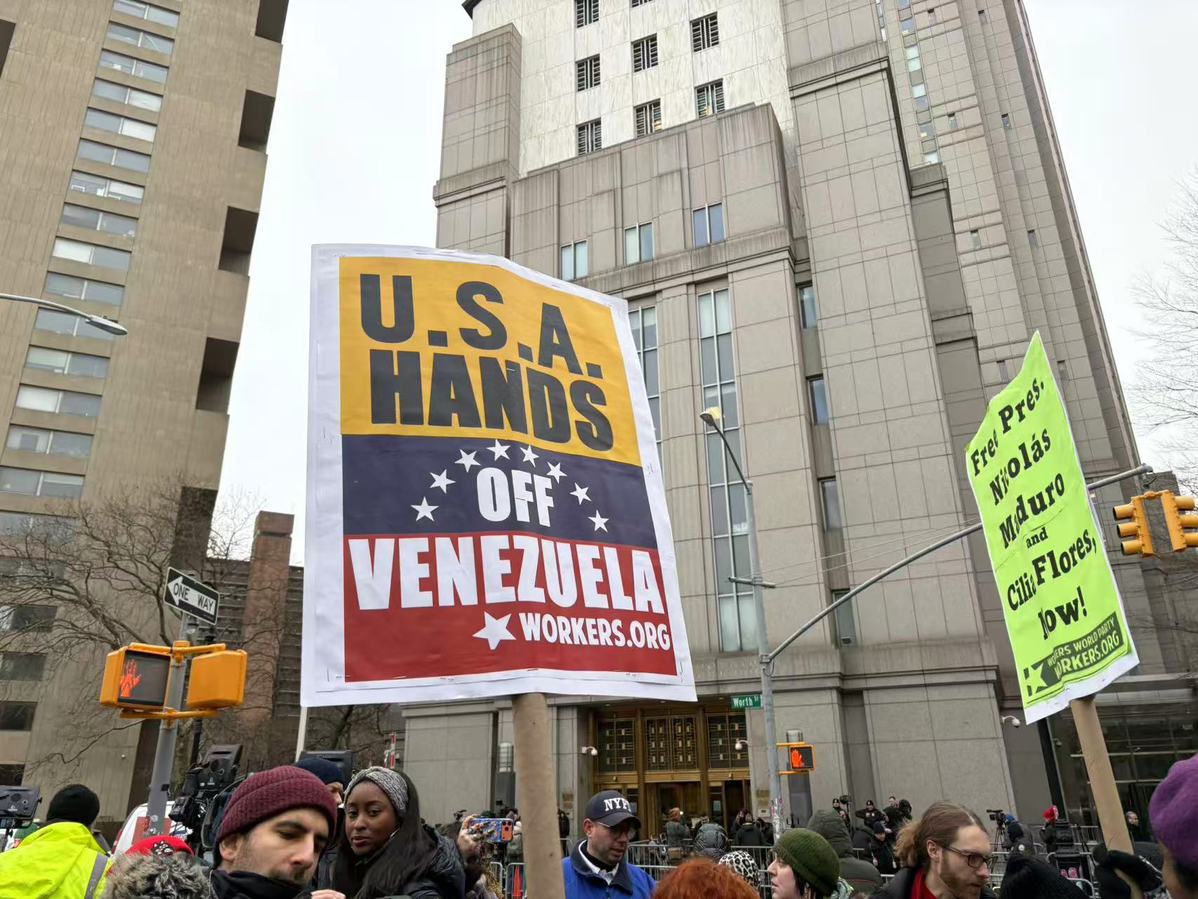
The United States military operation against Venezuela marks a divergence from the international system that emerged after WWII, exposing the erosion of the principles of sovereignty, legality, and multilateralism.
The attack not only redefines the internal situation of Venezuela, but also sends a warning to all of Latin America and the Caribbean that the use of direct intervention as a tool to subvert governments that are not "aligned" with Washington has returned.
The bombings of Caracas and the abduction of President Nicolas Maduro and his wife constitute the first military actions in the region since the approval of the controversial new national security strategy, which reinterprets and updates a doctrine more than 200 years old (the 1823 Monroe Doctrine) and the concept of "America for Americans".
This development has already had a profoundly negative impact on relations between Washington and Latin America and the Caribbean — heirs to a long history of US aggression, coups d'état, and military operations.
The prevailing perception in the region is that any government could be next, and in fact, direct threats have already been made against Colombia, Mexico, and Cuba.
What Washington has designed — with Secretary of State Marco Rubio as one of its main architects — is for South America and the Caribbean to be dominated by neocolonial rule.
This also unfolds amid deep regional fragmentation, with the rise of right wing forces and clear US interference in the internal affairs of several nations.
The inability of Latin America and the Caribbean to articulate a strategy, establish points of convergence and coordination, and build a unified long-term vision — despite ideological differences among their respective governments — buries any possibility of confronting the aspirations of the new US security doctrine as a bloc.
This aggression constitutes a serious precedent for the continuity of international relations based on the rules established after WWII.
The United States — possessing one of the most powerful armies in the world, with extensive military deployments and bases across the globe — has already demonstrated the capacity to carry out surgical operations that avoid a large-scale invasion, but effectively decapitate a system of government.
Although the world recognizes that the US attack on Venezuela violated international law, multilateral bodies such as the United Nations lack the ability to restrain Washington, as previously demonstrated by its failure to intervene in Gaza.
One objective of the attack was to eliminate Venezuela's influence as a regional actor opposed to the United States, as well as sabotage its deepening ties with Russia and China. However, the main goal undoubtedly lies in the US oil industry's interests in the resources of the South American giant.
President Donald Trump admitted as much at a press conference following the attack, stating that major US companies will invest millions to recover Venezuela's oil industry — which he said should have always remained in the hands of the United States.
Additionally, there are domestic political considerations, as President Trump — now midway through his term — needs a political win in the context of his campaign's promises to crackdown on drugs and immigration.
The government of the newly appointed acting president Delcy Rodríguez (formerly executive vice president) will face strong external and internal pressures that will sustain economic and social instability in the coming days.
On one hand, the United Socialist Party of Venezuela has a broad base of popular support demanding the release of President Nicolas Maduro. On the other, Trump has already threatened a second attack if US demands are not met and has announced that the military deployment in the Caribbean will be maintained.
According to the White House, plans are underway to "run Venezuela" until "conditions are ripe" to establish a new government, which, notably, does not include the Venezuelan opposition, discredited by Trump himself.
In reality, it seems unlikely that Washington can run Venezuela without the cooperation of the Venezuelan government, without occupying the territory, without reducing the multisectoral reach of armed forces loyal to Chavismo, and ultimately without eliminating a popular movement that has governed for more than 20 years.
The military aggression against Venezuela reveals a broader dynamic of geopolitical reconfiguration in which force once again prevails over law, and security is used as a pretext for intervention.
In the context of regional fragmentation and weakened multilateralism, Latin America and the Caribbean face the historic challenge of preventing this episode from becoming the norm.
The response — or the absence of one — will shape not only Venezuela's future, but also sets a precedent for the entire international system, increasingly marked by inequality and uncertainty.
Isaura Diez is the chief correspondent of the Latin American News Agency Prensa Latina, China Bureau.
The views don't necessarily reflect those of China Daily.
If you have a specific expertise, or would like to share your thought about our stories, then send us your writings at opinion@chinadaily.com.cn, and comment@chinadaily.com.cn.

The communication landscape between China and Pakistan is entering a new phase of media diplomacy. Over the decades, the two nations have primarily collaborated through traditional media to share their stories of bilateral relations, common development and prosperity, particularly in relation to the China Pakistan Economic Corridor (CPEC).
Today, digital media is reshaping this narrative. It offers journalists, academics, content creators and ordinary people the opportunity to participate in shaping the understanding of this partnership. A more human-focused and technology-driven communication ecosystem provides greater opportunities for both nations to enhance cooperation and challenge Western misconceptions about their relations.
Joint digital research and documentary projects are one of the biggest opportunities. While conventional media in the two countries have played a significant role in reporting infrastructure and economic collaborations, digital platforms can incorporate the human aspects and details that were previously difficult to document.
Collaborative multimedia projects can amplify the voices of people from Gwadar, Kashgar, Gilgit, Shanghai, Lahore, Islamabad and Beijing, allowing global audiences to witness the social changes that CPEC is fostering in local communities. Entrepreneurs, students, engineers and farmers whose lives have been touched by connectivity and development could be featured in TikTok and YouTube series created by young Chinese and Pakistani journalists. By focusing on human stories, these stories become more relatable and impactful.
Digital media also holds the potential to counter stereotypes surrounding China and CPEC, especially those circulated by some international circles. Topics like energy projects, industrial collaboration or professional training can be broken down into short videos, interactive explainers, infographics and podcasts. Pakistani journalists that have studied in China or visited CPEC sites can share their experiences in local languages, while Chinese content creators can introduce their audiences to the cultural richness and diversity of the cities and villages in Pakistan. These personal exchanges are more effective in cutting through misinformation than traditional statements or reports, as audiences tend to trust first-hand experiences.
The digital transformation of China provides significant learning opportunities to the Pakistani media. Platforms like Bilibili and Douyin demonstrate how youth-driven content can co-exist with informative and educational material. Online classes are reaching rural populations in China, a model that could be adapted for Pakistani audiences to communicate CPEC-related technologies, climate-friendly practices and agricultural innovations. Such communication not only makes information accessible but also encourages participation that builds trust in people.
Another promising field is the application of digital innovation for cross-border academic cooperation. Webinars and digital archives can facilitate joint research on communication, development and regional integration. A China-Pakistan Digital Media Lab can be formed to monitor online opinion and social trends, as well as train the next generation of journalists to navigate the sensitivities of global discourse. These spaces would assist in developing a shared intellectual foundation in future collaborations.
Integrating the influence of traditional media with the reach of social media can be achieved through integrated newsrooms. For instance, a major Pakistani news outlet might jointly produce a documentary with a Chinese media outlet, which could then be broken down into a series of short episodes on TikTok or Douyin. This multi-platform strategy ensures that the message reaches all audiences, regardless of age, through various formats. It also establishes a balance between traditional and new types of journalism, which is important for long term and stable collaboration.
Building digital narratives is much more than the creation of promotional content. It opens new platforms for cultural exchange and collective creativity. Collaborations on joint music videos, travel vlogs, online games and virtual tourism projects can introduce Chinese youth to Pakistani's heritage, while offering young Pakistanis a window into the modern culture of China.
China-Pakistan startup forums or virtual exhibitions can also be hosted on platforms like LinkedIn or business networks specific to a region. Technological and entrepreneurial influencers can emphasize the potential of e-commerce, AI, green energy and vocational education.
The second stage of the cooperation between China and Pakistan is going to be decided not only by the tangible projects on the ground but also by the stories shared on the internet. Digital media provides both societies with the opportunity to define these narratives collaboratively in their own voices, with precision, creativity and mutual respect. Through integrating the trustworthiness of conventional media and the dynamism of digital platforms, China and Pakistan can create a communication ecosystem that establishes a new benchmark for international collaboration in the digital age.
The writer serves as editor, China Desk with Internews Pakistan and may be connected at zamirasadi@gmail.com.
The views don't necessarily represent those of China Daily.
If you have a specific expertise, or would like to share your thought about our stories, then send us your writings at opinion@chinadaily.com.cn, and comment@chinadaily.com.cn.



