WASHINGTON -- The convening of the China-US high-level talks as scheduled despite recent turbulence in bilateral ties has sent out a reassuring message to those worried passengers on the China-US plane: their safety belts are securely fastened.
The depth and scope of China-US relations were especially obvious in the past two days, which witnessed intensified interaction and candid negotiations between senior Chinese and US officials at the seventh Strategic and Economic Dialogue (S &ED) and the sixth High-Level Consultation on People-to-People Exchange (CPE).
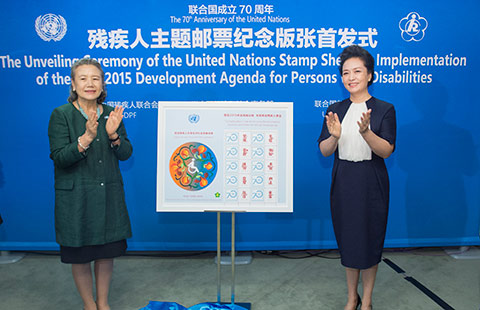
Three high-level Chinese officials appeared on the same stage with US Vice President Joe Biden, Secretary of State John Kerry and Treasury Secretary Jacob Lew on Tuesday to open this year's S &ED and CPE, in a public gesture to dispel the suspicion that the two sides were heading into confrontation after trading barbs recently over the South China Sea dispute and cyber security.
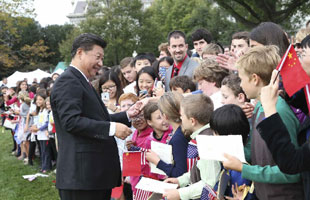
However, the two-day talks could not solve all outstanding issues. The most tangible outcome might be that the talks helped lower tensions and created a positive atmosphere for the planned first formal state visit to the United States by Chinese President Xi Jinping. US President Barack Obama said Wednesday he looked forward to welcoming him to the White House in September.
Xi's September visit is expected to add efforts to avoid the zero-sum game of major country rivalry.
In addition, the latest new round of talks has once again testified to the effectiveness of the China-US dialogue mechanism in ensuring that bilateral ties stay on track even during setbacks.
The talks were held at a time when China-US ties were strained over China's legal land reclamation on its islands and reefs in the South China Sea, and the unfounded US accusations of China's hacking into its computer systems. Washington even dispatched reconnaissance planes to the region in a dangerous move to challenge China's legal rights.
The chain of events led to pessimistic predictions by some that the China-US relationship has reached a tipping point and was heading towards confrontation. Some US politicians and experts even prodded Washington to "punish" China so as to rein in what they called its ambitions for regional hegemony.
However, despite the headwinds from Washington, the general picture in China-US ties largely remains unchanged: common interests outweigh differences while instances of cooperation outnumber disputes.
Nowadays, with an annual bilateral trade value of 550 billion US dollars, China-US economic ties have never been more interdependent. The exchanges between the two peoples have never been more frequent, with more than 10,000 Chinese and Americans traveling across the Pacific every day.
Simply speaking, the two big countries just cannot afford to head into confrontation due to their increasing convergence of interests. US investment tycoon George Soros warned Washington in a recent article that "the US has little to gain and much to lose by treating its relationship with China as a zero-sum game," while calling for building a strategic, mutually beneficial partnership with China.
Indeed, if the two sides can look far beyond the current disputes and manage them constructively, continue to hold dialogues and cooperate on major issues of mutual concern, then the China-US relationship will surely maintain a momentum of steady and healthy development.
Related Stories
Copyright 1995 - . All rights reserved. The content (including but not limited to text, photo, multimedia information, etc) published in this site belongs to China Daily Information Co (CDIC). Without written authorization from CDIC, such content shall not be republished or used in any form. Note: Browsers with 1024*768 or higher resolution are suggested for this site.
License for publishing multimedia online 0108263 Registration Number: 130349