


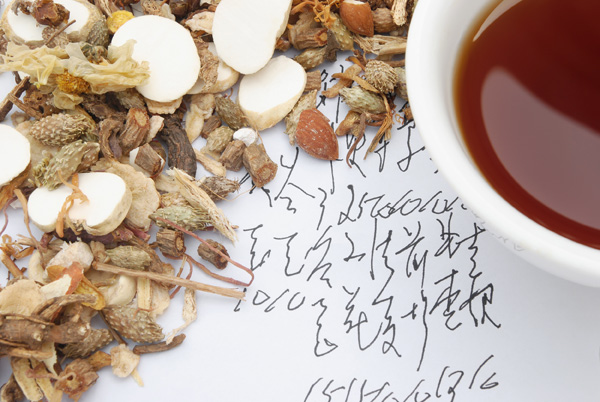
As the north bakes and the south swelters, China turns to tea
Hot weather is officially here with the summer sunshine. All over China now, the weather map is tinted various shades of red as the country swelters.
While the north is dry and hot, the southern regions are baking in humid heat they call sauna weather. That is why herbal teas are always an important part of this season.
These teas are infusions made with Chinese herbs or fruits and may taste slightly sweet or intensely bitter, depending on what they are prescribed for. But for as long as we can remember, herbal teas have been popular in these regions.
"Cooling herbal tea" or liangcha is so much a part of Chinese life that it has been listed a national intangible cultural heritage.
Southern Chinese, in particular, would not think of passing through summer without daily doses of cooling tea. And as the urban diaspora spreads, even major cities in the north are now enjoying the benefits of these teas-a result of improved marketing, packaging and logistics.
When the Sichuan hot pot migrated north, it took along the Cantonese cooling tea, and it became the rage to enjoy the numbing heat of the prickly ash peppercorns while imbibing huge quantities of liangcha by the side. It was an odd pairing.
However, this practice is actually frowned upon by herbal traditionalists.
Liangcha cannot be treated as a soft drink. Every glass or bowl has its designed dosage and benefits.
Carefully prepared infusions are sold in potbellied copper pots along the coastal stretch of southern China from Macao, Hong Kong to Guangzhou, Beihai, Zhanjiang right down to Hainan Island. These are specialist shops selling brews that have stood the test of time and generations.
For example, the country's most popular tinned herbal tea in a red can comes from a Cantonese recipe that is a couple of hundred years old. Each herbal shop in Guangdong or Guangxi has its own signature brew.
Among them was Baozhilin, the herbal shop owned by legendary martial arts master Huang Feihong.
These herbal tea shops are the result of both geographical and cultural serendipity.
They are all in an area known as Lingnan, a naturally humid valley that is a botanical treasure trove of rare plants and herbs-a fact long discovered by their homeopathy founders.
They collected and dried these natural ingredients and brewed a vast variety of cooling teas to combat the summer heat.
Most of these cooling infusions are made from dried flowers, leaves and roots all harvested from the region.
Some are more commonplace such as the flowers of chrysanthemum, honeysuckle and frangipani, wild licorice root, American ginseng, fritillary bulbs, lotus leaves, mulberry leaves, borage, mint, perilla, mugwort, elderberry, hawthorn, wolfberry and fruits such as snow pear, jujubes, luohanguo or arhat fruit and dried longans.
Some ingredients were rare, but were later cultivated, including ajuga, the bugleweed known in Chinese as xiakucao. Then there is also the fuzzy silver-leaved baizicao, or Antiotrema dunnianum.
These two herbs are common summer coolers and are easily prepared at home, sweetened with rock sugar or honey.





