



Deprived HK kids at losing end as virus widens digital divide









It has been a hard struggle for some of Hong Kong's most underprivileged students, who have no internet access at a time when schools are all online. Kathy Zhang reports from Hong Kong.
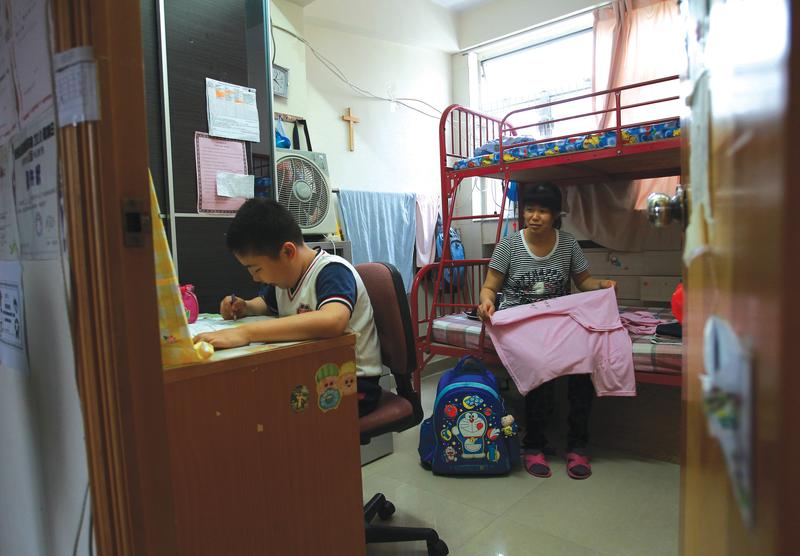
Students from poor families are suffering amid the global health crisis as their families can't afford internet services — they're missing out on school and the poverty cycle wears on.
That's precisely what stakeholders are worried about — the digital divide, the glaring fault of a system that, inevitably, favors the well-to-do over the poor. It's not the direction education wants.
Choi is a single mother with two children trying to keep up with their studies online. But, to do so, they've to become Wi-Fi squatters, hanging out where there's free internet, which is usually available for a limited time.
All classes are online. Schools have been closed since February as the city is at war with COVID-19. The battle is still going on and Choi's 13-year-old daughter and 10-year-old son are collateral damage.
"They (two children) are frustrated by the weak Wi-Fi signal at home on their mobile phones," said Choi.
The family lives in a subdivided flat in Kwai Chung, Kowloon. Choi works at a restaurant. She and her kids rely solely on her income and monthly government subsidies.
The rent comes with wireless internet, but it's weak and often can't handle stream video. The family can't afford mobile data to catch up on the children's online education.
Thus, McDonald's and 7-Eleven stores have become their classrooms. They go there to learn, using the free wireless networks.

However, it's not a good solution. Online classes normally go on for 40 minutes or more. Free Wi-Fi at 7-Eleven outlets is limited to 30 minutes a day. One minute Choi's daughter is in on a group video chat, the next minute she's gone — offline.
It's all happening at a time as people stay at home to keep themselves safe from the coronavirus, and it's no comfort to Choi when her kids are out, going from place to place trying to access the internet. "But, I've no choice. I can't prevent them from learning."
Choi is worried, but she feels all she can do is to keep admonishing: "Wash your hands, keep a safe distance from other people".
The Alliance for Children Development Rights ran a survey of 286 primary and secondary students from grassroots families from February to early March.
It found that more than 65 percent of students study on their mobile phones during the pandemic. Fewer than 10 percent of them said there're no digital devices at home and they can't take online classes.


- Mainland spokesperson rebukes DPP over ‘Taiwan independence’ stance
- Brazilian delegation explores Shanghai's governance, urban development
- China advances legal reforms in public security, justice system
- Beijing steps up crackdown on medical insurance fund crimes
- New measures aim to curb fatigued driving
- Tiny mobile barbershop brings free services, warmth to rural elderly





