



Xinjiang locals answer questions from reporters









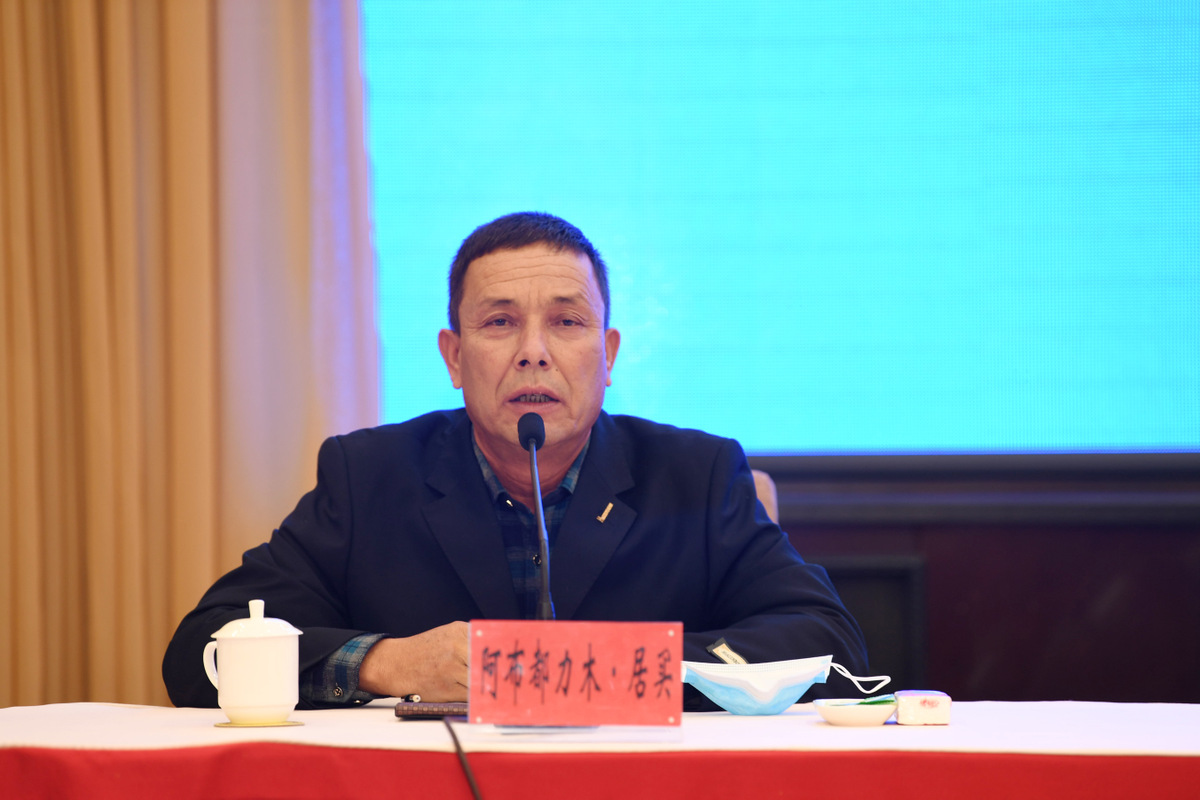
Question 2: Some foreign media reports claim ethnic minority workers' customs, habits, and religious belief are "banned" and "suppressed." Could some of the workers talk about how their rights, such as their customs, habits and religious belief, are protected at their workplace?
Answer: I am Abdul Juma from Luopu county of Hotan prefecture. I now work at a cement factory in the county.
I am 50 years old and have worked for three factories. Over the years, I've never heard of and seen anyone whose customs, habits and religious belief were banned and suppressed.
As far as I'm concerned, I have been working for this cement plant since 2013. The company has offered us good salary and catering and living conditions, with which we are very satisfied. It respects our dietary habits and has specially opened a Muslim canteen to provide pilaf, hand pulled noodles, spicy chicken, pitir manta and so on; all are our favorite food. In Luopu county, where I live, Muslim restaurants can be seen everywhere. We often invite our friends to try these restaurants on holidays.
When the company organized the employees for outings or trips, it would buy lamb for us to have a barbecue. Every time, I was responsible for making shish kebabs, which were so delicious that my colleagues would rush to eat, and they all praised my barbecue skills. During our traditional festivals, such as the Corban Festival and Id al Fitr, the company gave each employee 800 to 1,000 yuan of subsidy for buying beef and lamb. In order to celebrate the festivals, it also organized cultural activities, in which some colleagues would play the cheerful folk instrument rewap, while others would dance energetic folk dance mashrap; everybody would join the lively and joyful activities. After work or on weekends, the Muslim employees can go to mosques to attend religious activities. No one has ever interfered in our weddings, funerals and other traditional and customary activities.


- Mainland spokesperson rebukes DPP over ‘Taiwan independence’ stance
- Brazilian delegation explores Shanghai's governance, urban development
- China advances legal reforms in public security, justice system
- Beijing steps up crackdown on medical insurance fund crimes
- New measures aim to curb fatigued driving
- Tiny mobile barbershop brings free services, warmth to rural elderly





