



Education ministry backs English learning









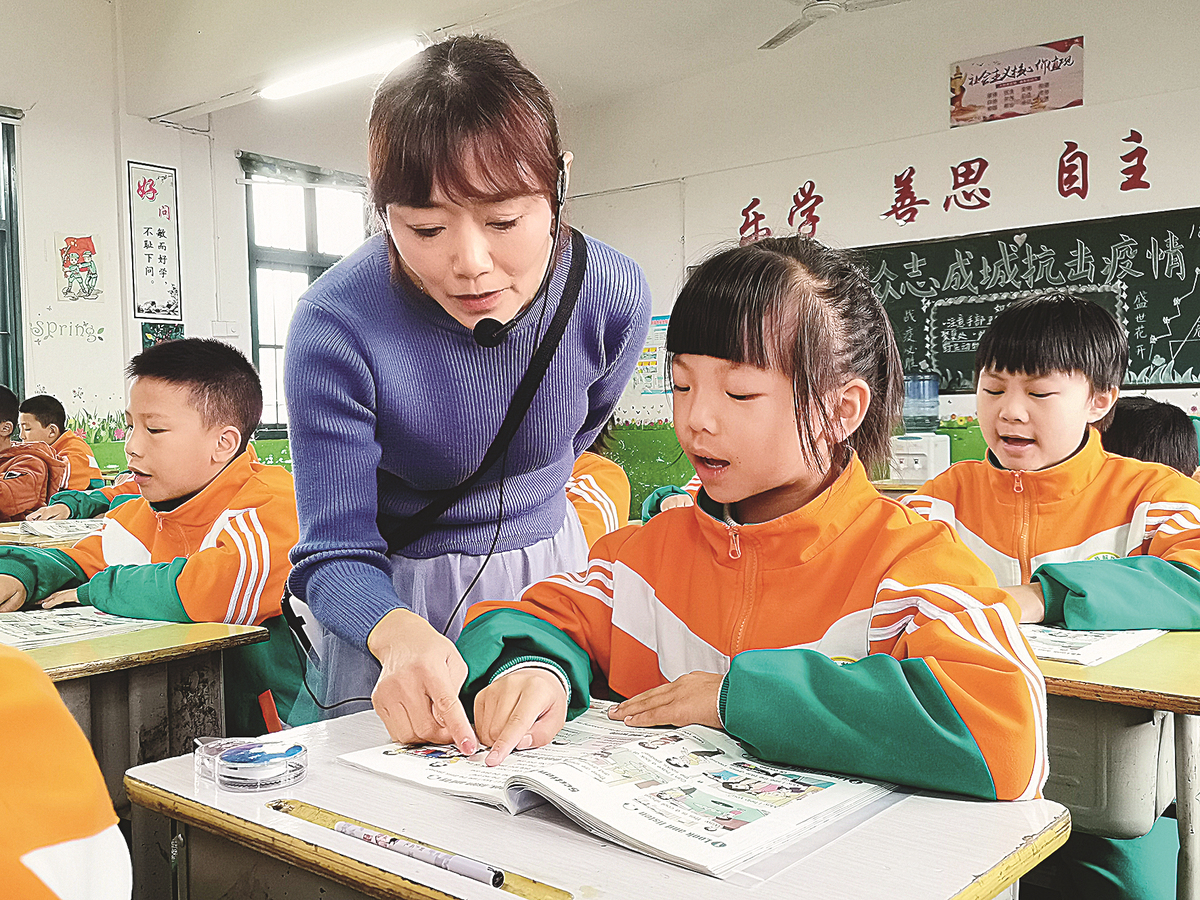
Foreign language conducive to cultural awareness and international mindset
Despite the teaching hours of English at Chinese schools being lower than that for Chinese language and math, its weighting in the national college entrance exam, or gaokao, is the same as those subjects and will not change, the Ministry of Education said.
In a recent response to a proposal made this year by a deputy of the National People's Congress asking the ministry to cut the teaching hours and weighting of English in important exams, the ministry said foreign language is an important part of students' overall development and is conducive to cultivating students' language ability, cultural awareness, international mindset and cross-cultural communication ability.
By reducing the time spent on English, schools can increase the teaching of traditional Chinese culture and help children develop pride and confidence in Chinese culture at a young age, the proposal said.
The deputy also said that English has become "abnormally" important and learning the language should not take up so much time.
According to the newest compulsory education curriculum, Chinese language accounts for 20 to 22 percent of total course hours for primary and middle schools, math takes up 13 to 15 percent, while only 6 to 8 percent is allocated to English, lower than that of physical exercise and health, the ministry's response said.
However, it also pointed out that a guideline issued by the State Council, China's Cabinet, in 2014 stipulated that the weighting of Chinese, math and English in the gaokao remain unchanged, so English exams will also keep the same weighting, it said.
In the gaokao, English is equally weighted with Chinese and math, with each typically accounting for 150 points out of a total of 750 points.
The ministry has always paid great attention to the education of traditional Chinese culture and has taken various approaches to help students inherit and promote the culture and develop firm confidence in it, the response added.
The ministry's response and the deputy's proposal have triggered heated discussions on social media and the hashtag "education ministry responding to the proposal to reduce the weighting of English teaching "had been read more than 520 million times on Sina Weibo, a microblogging platform, as of Tuesday.
Some netizens agreed with the proposal and said many people do not use the language in their daily lives and work. Others said the language is very important for people to get higher degrees, promotion opportunities and for the country to further open up to the outside world.
It is not the first time lawmakers and political advisers have proposed to make English less important for students during the two sessions — the annual meetings of the country's top legislature, the National People's Congress and the top political advisory body, the National Committee of Chinese People's Political Consultative Conference.
Xu Jin, a member of the National Committee of the CPPCC and also a member of the Central Committee of the Jiu San Society, one of China's eight non-Communist political parties, proposed last year that English should not be a core subject like Chinese and math and more course hours should be given to improving students' skills in physical education, music and art.
Wu Peng, an English professor at the School of Foreign Languages at Jiangsu University, said rather than simply learning a language, the purpose of English learning and teaching currently is to enable students to tell China's story to the world.
"While in the past, Chinese people learn English to know about the West, nowadays we learn the language to help the world better understand China," he said.
While there are not as many English courses as Chinese or math according to the national requirement, as long as it remains equally important in the gaokao, schools have found ways to add more time to English teaching, such as making students read English during morning exercise, he said.
Moreover, English textbooks and exercises also contain traditional Chinese culture, so saying that learning English is not conducive to promoting traditional Chinese culture is wrong, he said.
As English will remain the global lingua franca, the requirements for students' English proficiency will not be reduced, and the language will become equally, if not more important for Chinese students, he said.


- Shanghai Disney Resort marks 10 years of community impact on Intl Children's Day
- China's Long March 12B rocket completes successful maiden flight
- New online platform empowers children with legal knowledge
- China sees first decline in juvenile and minor-related crimes in five years
- China steps up disaster prevention as flood season begins
- Shanxi school holds themed event to celebrate Intl Children's Day





