


Utopia forged by women a modern model of harmony
Mosuo ethnic people in Yunnan's 'Shangri-La' boost tourism, maintain matriarchal culture










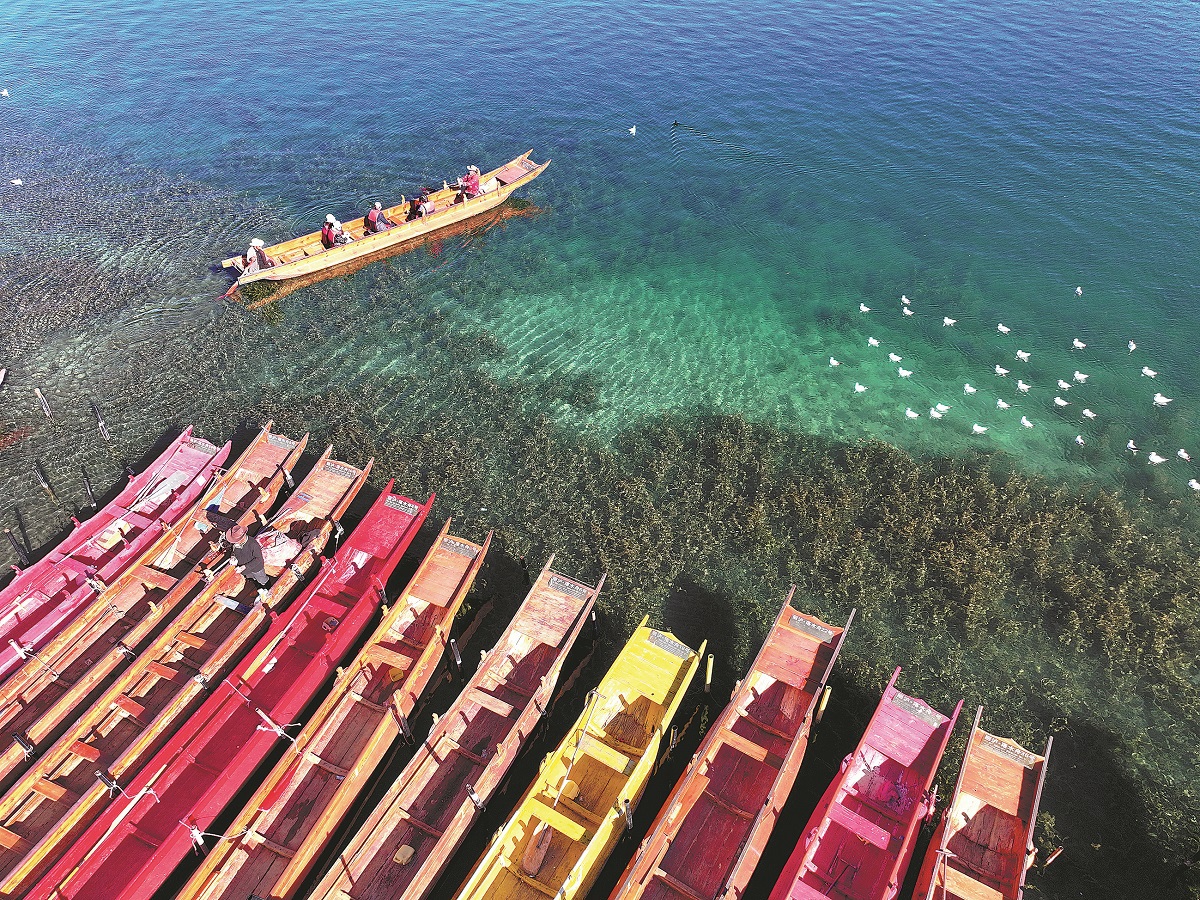
Looking for 'Shangri-La'
Christiane Marchais, a tour guide from the French cultural travel agency Intermedes in Paris, has chosen Lijiang as one of her top destinations for exploring China's ethnic groups. In October, she led a French team to delve into the rich cultural tapestry of Southwest China.
"Yunnan is a melting pot of ethnic cultures and a popular destination for Western travelers. We came here in search of the legendary Shangri-La and to explore the mysterious ethnic cultures," Marchais said.
The concept of "Shangri-La" was popularized by British novelist James Hilton in his 1933 novel Lost Horizon. Hilton described a small, harmonious village nestled in the Kunlun Mountains where the inhabitants lived in eternal happiness and youth. This mythical place has since become synonymous with an earthly paradise.
In China, the Greater Shangri-La Cultural Circle spans the tri-border area of Sichuan and Yunnan provinces and the Xizang autonomous region. Lijiang, a city within this region, has emerged as a key destination for both domestic and international tourists.
Before the 1990s, the domestic tourism market was virtually nonexistent, Geze recalls. Those who did visit tended to be academics and photographers looking to gain some insight into the region's highly unusual culture. These visitors were primarily foreign backpackers and official delegations.
"Many female European tourists were amazed by the lifestyle of Mosuo women, and they considered it a true form of feminism. Some even said they would like to replicate a Mosuo-style matriarchal village back in the United Kingdom," Geze said.
Initially, the Mosuo people were unfamiliar with monetary transactions and relied on a barter system. In the early days, visitors would come to the village, and the Mosuo would provide food and accommodation, but get little in return.
This resulted in village resources being depleted, Geze said. Local governments eventually intervened and established a system of fees, and a regulated tourism industry was born.
A portion of the 3 billion yuan ($423 million) earmarked for tourism development is being allocated to preserving the Mosuo culture. The economic push is expected to create jobs for locals and markedly lift living standards.
Today, Geze's family hosts several tour groups daily for "Mosuo home visits", allowing tourists to see firsthand how Mosuo people live.
"From complete dependence on the land to gradually moving away from it, the transformation in lifestyle has brought more choices and freedom. Although climate affects crop yields, the income from tourism ensures a stable livelihood," Geze said.





