


Utopia forged by women a modern model of harmony
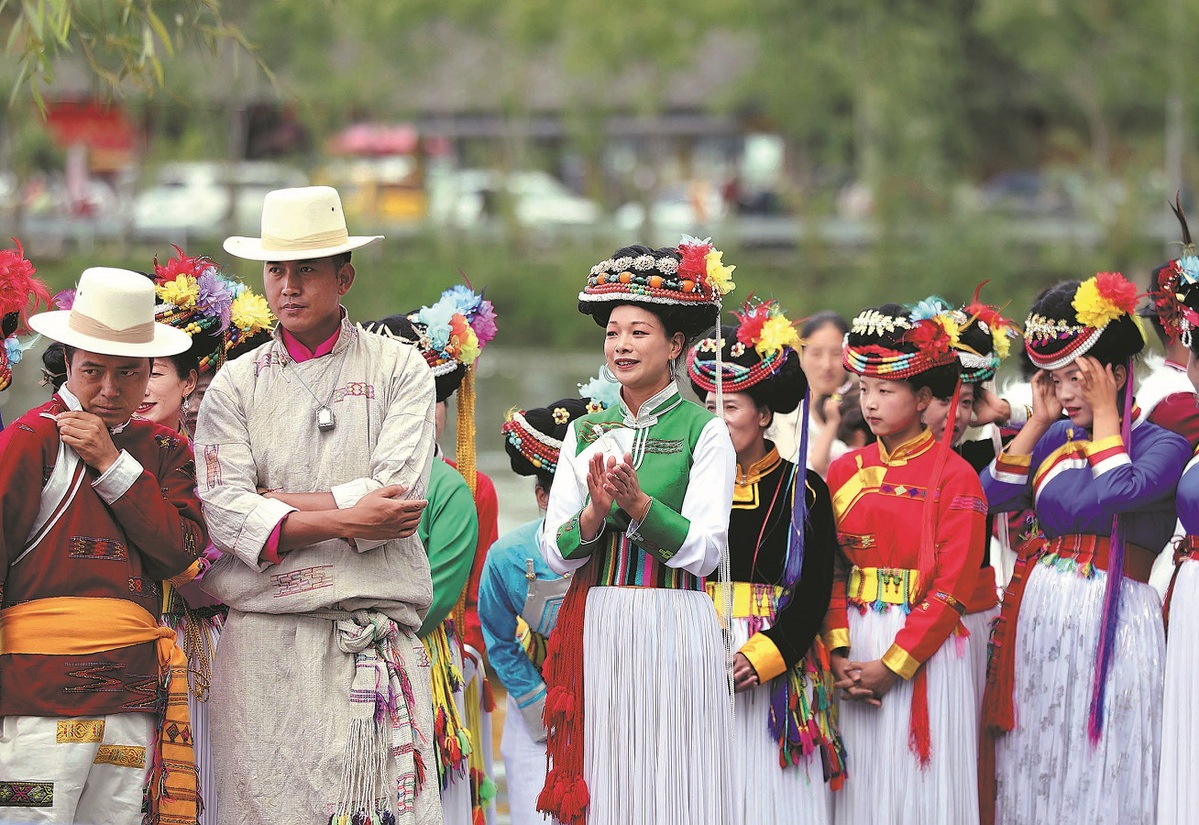
Mosuo ethnic people in Yunnan's 'Shangri-La' boost tourism, maintain matriarchal culture










Cultural renewal
Beside the sapphire waters of Lugu Lake, 50-year-old Mosuo man Dashi Pinchu sits in his courtyard, deep in discussion with his two sisters over blueprints for his latest lodge renovation.
A Luoshui villager who operates six boutique hotels with his big family, Dashi is embarking on his third major upgrade — a delicate balancing act of weaving modern comforts into the architectural soul of traditional Mosuo houses.
Dashi's entrepreneurial journey began in 1994, when the first flicker of electricity reached this remote Yunnan village. Paddling his canoe to sell fish and operate a convenience store on an island of Lugu Lake, he watched wide-eyed as pioneering tourists checked into lodges converted from wooden Mosuo houses.
"By 1997, my family had opened our own guesthouse. Back then, the whole village hosted barely 100 visitors a year," he said. Today, his matrilineal household — headed by his mother and sisters — earns about 2 million yuan annually.
"These hand-carved lattices are disappearing, replaced by metal and glass," he said, adding that his 2025 renovation plan proposes a compromise — preserving external woodwork while modernizing interiors. "Even as we meet customer demand, remaining true to our cultural heritage is paramount."
Yet transformation runs deeper than architecture.
While half of Mosuo families retain local traditions — where spouses live separately with their maternal clans — the other half now embrace nuclear family units. Even his children have adopted Han-style wedding ceremonies, Dashi said.
Ciren Duoji, director of the Mosuo Museum in Lijiang, said that Mosuo family structures are diversifying, a process that began in the 1950s. Policies back then encouraged monogamy, and outsiders portrayed walking marriage customs as "lagging behind the times".





