


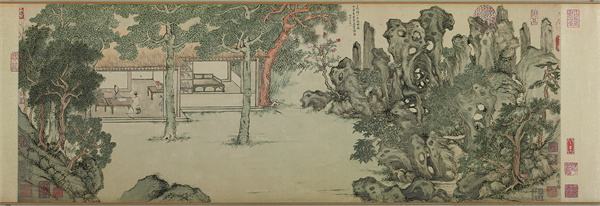
An exhibition in Suzhou revisits Wen Zhenheng's book, revealing how the Ming scholar's reflections on gardens, objects and aesthetics still illuminate the art of living today, Zhao Xu reports.
Nearly four centuries ago, Chinese scholar Wen Zhenheng (1585-1645) wrote a book with a title that seemed almost mocking: The Superfluous Things (Zhang Wu Zhi). This summer, the Suzhou Museum in eastern China's Jiangsu province has mounted an exhibition inspired by his work.
By definition, "superfluous "means unnecessary, redundant or nonessential. At first glance, then, devoting a book to such things might appear frivolous. Yet, Wen's choice of title reads less like an admission of triviality than a deliberate paradox — an invitation to look closer, and to find meaning in what others might dismiss.
So, what were the things that Wen deemed at once "superfluous" and yet worthy of an entire book? In essence, they encompassed the refined essentials of the ideal life of a member of ancient China's literati. For Wen, this extended not only to the environment one inhabited but also to every object that might catch the eye, whether by design or by chance — from a single flower in a vase, a miniature mountain-shaped brush rest, or a painting adorning the wall, to a teacup gently held in the hand.
"Why bother? Because it is as much about asserting the right to define aesthetic and moral standards for himself and his entire literati class as it is about immortalizing, in words, a family's multigenerational devotion to cultivation, taste and tradition," says Lyu Jian, curator of the exhibition, From the Humble Administrator's Garden to The Superfluous Things. He points out that the author's great-grandfather Wen Zhengming (1470-1559) was a pivotal figure in the development of Chinese painting and calligraphy, and a cultural leader in the Suzhou area.
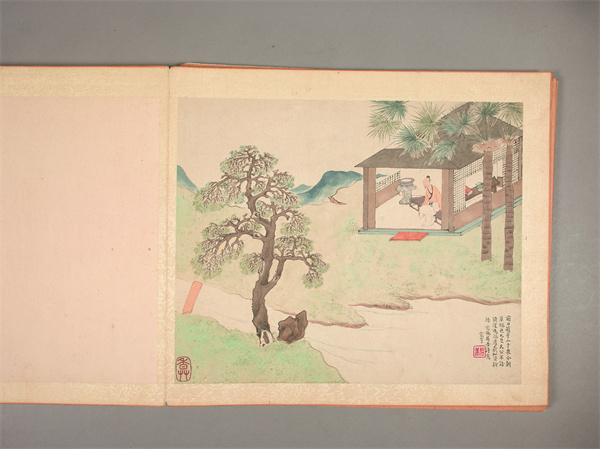
The garden — famously associated with the elder Wen — was first laid out in 1509 by a retired official in Suzhou. Today, it stands beside the Suzhou Museum.
"The idea of the garden gives the exhibition both its spirit and its stage — everything discussed in the book is either a part of it or unfolds within its bounds," says Lyu.
Both Wen Zhengming and his great-grandson, along with the generations in between, regarded gardens not merely as landscapes but as holistic spaces of self-cultivation. There, daily rituals such as tea drinking, incense burning and the appreciation of painting were pursued as paths to refinement.





