BEIJING -- The new resource tax on coal has been deemed a crucial push for reforming the industry, presenting an opportunity for a better local taxation system.
On Monday, China began a resource tax on coal based on price rather than the traditional basis of quantity. The tax rate will be decided by the provincial governments within a 2 and 10 percent range, according to the Ministry of Land and Resources.
The policy was first announced at an executive meeting of the State Council chaired by Premier Li Keqiang on Sept 29.
The coal tax reform will benefit resource regions, achieve balanced development between regions, help prevent over-consumption and boost industrial upgrades, according to the meeting. In 2011, China reformed the resource tax on crude oil and natural gas.
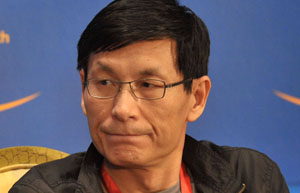
"It's an important move for China's local taxation as well as an economic way to tackle the problem of smog pollution," said Jia Kang, director of the Research Institute for Fiscal Science at China's Ministry of Finance.
He explained that the former quantity-based method caused unchanged tax volume despite price increases, which undermined the regulation effect of such tax.
But now the tax rate will be decided within the set range of 2 to 10 percent, which is expected to regulate the coal industry more flexibly, he said.
"The new policy will inevitably put extra burden on coal enterprises," Jia said, "But the recent slump of coal prices provided a proper timing to trigger the policy so as to mitigate the impact."
Such reform will stimulate the development in the regions rich in coal reserves like Xinjiang, Tibet, Ningxia, Guizhou, Shanxi and other less developed areas.
"The new coal tax will bring huge and stable taxation and help improve local taxation system," Jia said.
He believed the policy is a part of China's ongoing reforms in tax and fiscal systems that will align the country's resource and pricing mechanisms with the market. It will also enhance energy saving and cost reduction initiatives.
Meanwhile, the new policy abolished some dues related to price regulation and local development.
Zhang Hong, deputy director of China National Coal Association (CNCA), said more than 109 coal-related taxes and dues took up about 35 percent of the coal industry's revenue before.
According to the CNCA's data, the profit in coal sector stood at 80.47 billion yuan in Q1-Q3 this year, down 47.1 percent from a year ago, with more than 70 percent of coal enterprises are suffering deficits.
"Our priority still stresses the control of total coal production," said Fang Jun, director of coal department of National Energy Administration.
Along with deepening reform, stricter supervision to prevent over capacity and illegal production is another key to drag China's coal industry out of current plight, Fang added.

Copyright 1995 - . All rights reserved. The content (including but not limited to text, photo, multimedia information, etc) published in this site belongs to China Daily Information Co (CDIC). Without written authorization from CDIC, such content shall not be republished or used in any form. Note: Browsers with 1024*768 or higher resolution are suggested for this site.
License for publishing multimedia online 0108263 Registration Number: 130349