



China issues white paper on democratic reform, achievements in Tibet









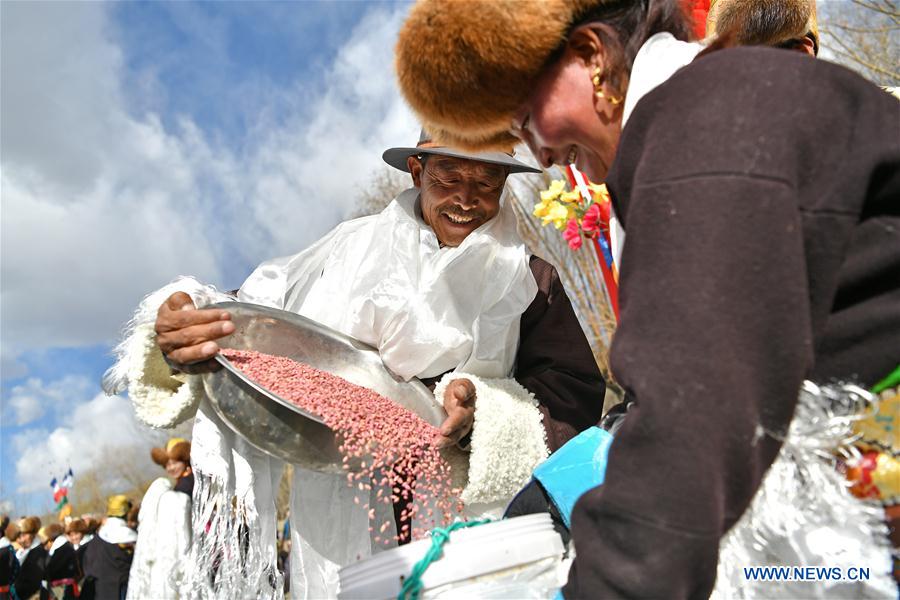
Life expectancy of people in Tibet rises to 68.2 years
The life expectancy of the people in Tibet increased from 35.5 years before 1959 to 68.2 years now, said a white paper released Wednesday by China's State Council Information Office.
The white paper, titled "Democratic Reform in Tibet -- Sixty Years On," elaborated on the improvements Tibet has made on various fronts since the democratic reform in Tibet in 1959.
Tibet's population has grown from 1.23 million in 1959 to 3.44 million in 2018, with Tibetans accounting for over 90 percent of the total, it said.
The living condition of people in Tibet has improved, the white paper said, noting that in 2018, the average per capita disposal income of urban residents was 33,797 yuan (5,035 U.S. dollars), and that of rural residents was 11,450 yuan.
Before the democratic reform in Tibet, education was largely the preserve of the privileged aristocracy. The serfs who made up 95 percent of the population were not entitled to education, resulting in an illiteracy rate surpassing 95 percent among young people, it said.
In 2018, the net enrollment rate in primary school was 99.5 percent, and gross enrollment rates in junior high, senior high and higher education were 99.5 percent, 82.3 percent and 39.2 percent respectively.
In Tibet today there are 1,547 medical institutions of various types, offering 16,787 beds and employing 19,035 medical staff. The figures increased by 24 times, 35 times and 23 times respectively compared with those before the democratic reform, the white paper said.
The childbirth mortality rate of people in Tibet fell from 50 per 1,000 at the beginning of the reform to 1.02 per 1,000 in 2017, and the infant mortality rate from 430 per 1,000 to 10.38 per 1,000, it noted.
In January, the government of Tibet raised the minimum standard of subsistence allowance to 9,600 yuan for urban residents and 4,450 yuan for rural residents per person per year, the white paper said.


- Hebei's updated tree protection rules take effect July 1
- Hebei's Yishui Lake offers cool summer escape amid mountain scenery
- Sino-British dialogue explores waterfront urban development
- China calls for vigilance against remilitarized Japan
- Gansu farmer 'Field Mouse Auntie' reads, writes and records village life
- China pioneers intelligent transport systems for enhanced safety and efficiency





