



Nuke research school to break ground soon









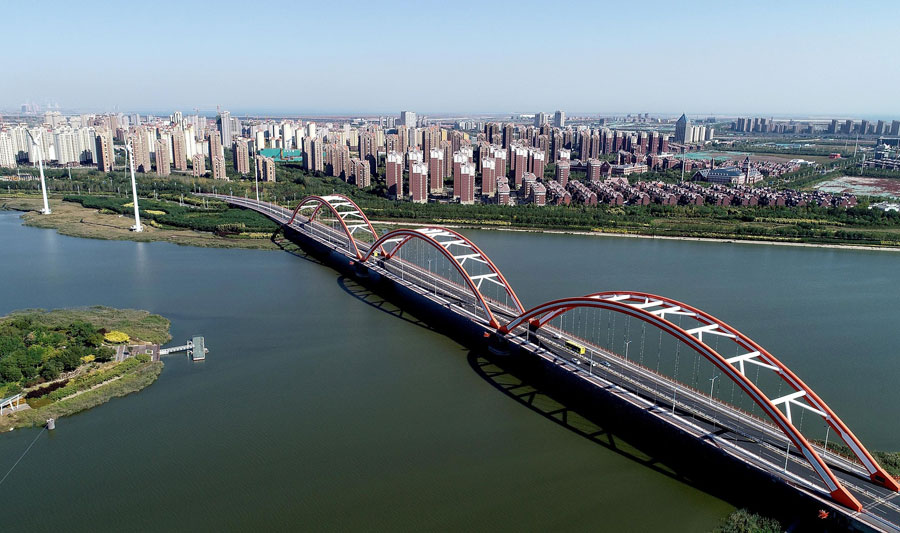
China's first university devoted to nuclear research will break ground in September, with the construction expected to last until 2021 in the coastal area of Tianjin.
The city's construction authorities released the information on their website on Monday, vying for supervisors for the project.
A total of 675 million yuan ($98.1 million) has been allocated for investment in the construction area of 223,125 square meters, according to the website.
The new university will be located in the northern part of the China-Singapore Tianjin Eco-City - a landmark area jointly invested in by the Chinese and Singaporean governments that is part of the city's Binhai New Area.
A senior executive of the administrative committee of the Eco-City said that the university's construction has passed strict environmental protection assessment and will not harm the local ecology.
"It's a research place, and the public should not worry too much about the university's impact on the environment," the executive said.
The university will offer undergraduate, graduate and doctoral programs and focus on research and international exchange.
The university will be located near the Teda Aircraft theme park and two communities, said an insider who has been to the area.
According to the administrative committee, a property developer under the China National Nuclear Corporation purchased the land with a total investment of 1.3 billion yuan last year.
The university is backed by the China National Nuclear Corporation, which has also supported other universities including the University of South China in Hengyang, in Hunan province, and the East China University of Technology in Nanchang, Jiangxi province.
Wan Gang, president of the China Institute of Atomic Energy under China National Nuclear Corp, said in a previous interview that the country has a critical need to foster and accumulate nuclear industry professionals and is urged to advance the training of researchers in the field.
The company announced plans to build a corporate university in 2011 because its two research organs - including a management personnel training institute and a postgraduate training organization, the China Institute of Atomic Energy - are insufficient for the company's growth, Wan said.


- Patients as pioneers: A doctor changes cancer research in China
- China-Europe flights emerge as summer travel hotspot
- Blueprint unveiled for Beijing's project 2035
- Summer wheat harvest set to expand nationwide as weather improves
- Legal seminar underscores rule of law in Greater Bay Area integration
- Beijing court sees sharp rise in youth cyber disputes





