



Nation faces uphill battle in recycling used batteries









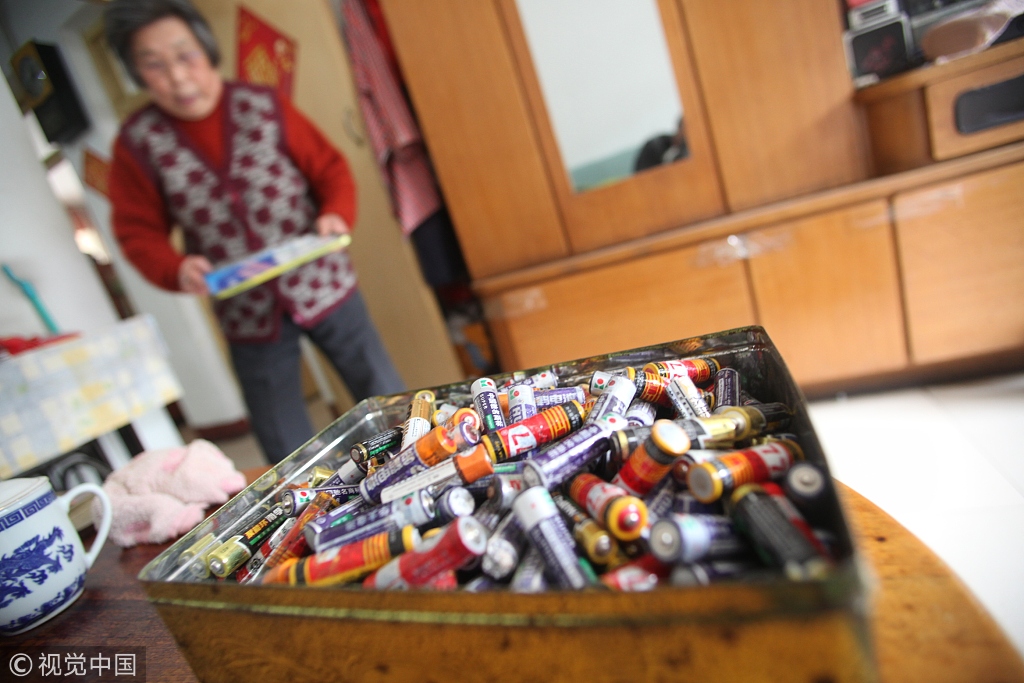
For many, figuring out how to dispose of used batteries is a headache.
Zhang Chengliang, a 33-year-old cartoonist in Beijing, used to collect spent dry-cell batteries and keep them at his home. "I didn't know what to do with them because I couldn't find a place to dispose of them safely," he said.
It wasn't until around one year ago Zhang stopped collecting old batteries after noticing the environmental label, which indicates the batteries pose no harm to the environment if dumped.
Dry-cell batteries are widely used in household items such as remote control and flashlights. Many people believe discarding used dry-cell batteries may cause pollution, because of the toxic heavy metals they contain.
But experts say this belief is no longer accurate, as dry-cell batteries now contain low levels of toxic heavy metals and pose no harm to the natural environment thanks to improved technology.
"As far as environmental protection is concerned, there is no need to recycle used dry-cell batteries," said Cao Guoqing, the former deputy secretary-general of China Battery Industry Association.
He said the content of mercury, which is considered a major toxic substance in batteries, in a dry-cell battery is almost the same level as that of unpolluted soil.
"It is safe to bury old dry-cell batteries with other household waste, which has no risk of contaminating the soil," Cao said.
With improved technologies producing non-mercury batteries, China outlawed the sale of batteries containing more than 0.0001 percent mercury in 2006.
In 2008, the country removed waste dry-cell batteries from the list of hazardous wastes, which meant they could be dumped along with other household wastes.
Since 2010, battery manufacturers have also been mandated to keep cadmium and lead content — another two heavy metals used in batteries — below 20 mg per gram and 40 mg per gram respectively. "These are levels that pose no harm to human health and meet environmental protection standards applied in the developed world," Cao said.


- UK companies seeking larger role in China
- Defense spokesman says Japan risks becoming 'source of turmoil' in East Asia
- Patients as pioneers: A doctor changes cancer research in China
- China-Europe flights emerge as summer travel hotspot
- Blueprint unveiled for Beijing's project 2035
- Summer wheat harvest set to expand nationwide as weather improves





